Exploring the Future of AI-Powered Cybersecurity
Every day, millions of cyber attacks are launched across the internet. Most people never see them. Businesses often don’t notice them until it’s too late. The world is becoming more connected than ever. We bank online, store personal memories in the cloud, run companies remotely, and share sensitive data across platforms without thinking twice. But as technology evolves, so do the threats. Traditional cybersecurity methods are no longer enough to defend against modern attacks that adapt, learn patterns, and strike within seconds. A new era of defense is emerging, one powered by intelligent systems capable of detecting danger before damage happens. Welcome to the future of AI-powered cybersecurity.
The Future of AI-Powered Cybersecurity Blog
Your Trusted Source for the Future of Cybersecurity, Future AI and Decentralized Science.



Why Cybersecurity Needs a Transformation
Cybercrime has matured into a global industry. Attackers use advanced techniques such as automated phishing campaigns, ransomware networks, and stealth infiltration methods that can remain hidden for months. Meanwhile, businesses are storing more sensitive data than ever before. Cloud platforms, remote work environments, and smart devices have expanded the attack surface dramatically. Relying on yesterday’s security strategies is no longer enough.
Key challenges shaping modern cybersecurity include:
The overwhelming volume of daily security alerts, the shortage of skilled security professionals, increasingly targeted attacks against businesses and individuals, rising financial damage from data breaches, and the constant emergence of previously unseen vulnerabilities. To stay ahead, security must become proactive rather than reactive. That is exactly where intelligent defense systems are changing the landscape.
Understanding the Future of AI-Powered Cybersecurity
At its core, AI-powered cybersecurity focuses on recognizing patterns, learning from activity, and identifying threats before they escalate. Think of it as a security team that never sleeps, continuously analyzing behavior across networks, devices, and applications. Instead of depending solely on known threat signatures, modern systems observe how users normally behave. When something deviates from that baseline, an unusual login location, abnormal data transfer, or suspicious access attempt, the system flags it immediately. Over time, this approach creates a defense mechanism that becomes sharper and more accurate.
What makes this approach so powerful?
It processes enormous datasets within seconds. It reduces human error in threat detection, adapts quickly to new attack strategies, shortens response times during incidents, and helps security teams focus on critical risks. The goal is not to replace human expertise but to strengthen it. Security professionals gain better visibility, clearer insights, and faster tools for decision-making.






How Intelligent Security is Changing Threat Detection in 2026
Changing Threat Detection in 2026
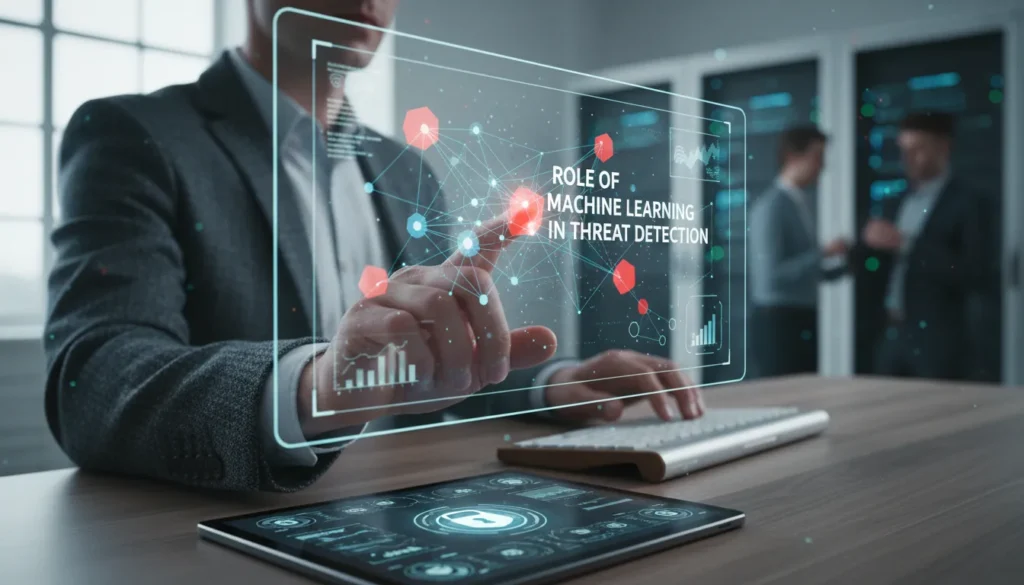
Speed is everything in cybersecurity. A delayed response can mean the difference between a blocked intrusion and a full-scale breach. Traditional tools often rely on predefined rules. While effective against known threat detection, they struggle with zero-day attacks, vulnerabilities that have never been seen before. Modern detection methods take a behavioral approach.
By continuously analyzing activity across systems, these tools can recognize early warning signs such as Sudden spikes in network traffic, Multiple failed login attempts, Unusual file access patterns, Hidden malware behavior, and irregular communication between devices. This allows organizations to act before attackers gain control.
Predictive Defense Play Stopping Attacks Before They Begin
Imagine being alerted to a break-in before a door is even opened. Predictive cybersecurity aims to do exactly that. By studying historical attack data and identifying trends, advanced systems can forecast potential risks. This gives organizations time to reinforce weak points and adjust their defenses proactively. Benefits of predictive protection include: Earlier threat identification, reduced downtime, Lower recovery costs, Stronger business continuity, and greater customer trust. For growing companies, this shift is especially important. Prevention is almost always less expensive and less damaging than recovery.
Protecting Privacy in an Increasingly Connected World
As security technology advances, privacy must remain a priority. People want assurance that their personal information is handled responsibly and protected against misuse. Strong cybersecurity supports that expectation by safeguarding: Financial records, Medical data, Private communications, Identity details, and Intellectual property. Organizations that invest in forward-thinking protection demonstrate a commitment to their users. Trust, once lost, is difficult to rebuild. In the coming years, companies that treat privacy as a foundation rather than an afterthought will stand apart from the competition.



“
Threats are becoming more complex, but defenses are becoming more capable. The shift toward intelligent protection signals a future where breaches are harder to execute and faster to contain.
Why Cyber Innovation Matters Now
Building a Safer Digital Future
The future of AI-powered cybersecurity is not about chasing trends; it is about creating resilience. Organizations that embrace intelligent defense today position themselves for a stronger tomorrow. Whether protecting a startup, an enterprise network, or personal devices, the mission remains the same: stay alert, stay prepared, and stay ahead.
Security teams often face thousands of alerts every day. Sorting through them manually is exhausting and inefficient. Automation is helping change that reality. Routine tasks such as log analysis, vulnerability scans, and incident triage can now happen instantly, freeing professionals to focus on strategy rather than repetition.
Foundations of a future-ready security strategy
Invest in adaptive protection systems, prioritize employee awareness and training, perform regular security audits, develop a clear incident response plan, and treat cybersecurity as an ongoing commitment. Security is no longer just an IT concern. It is a business priority, a customer expectation, and a cornerstone of digital growth.
Challenges That Will Shape the Next Decade
While the future is promising, it is not without obstacles. Attackers are evolving just as quickly, often experimenting with new technologies themselves. Security leaders must prepare for a landscape defined by constant change. discover top 5 AI tools enhancing cybersecurity in 2026 with details.