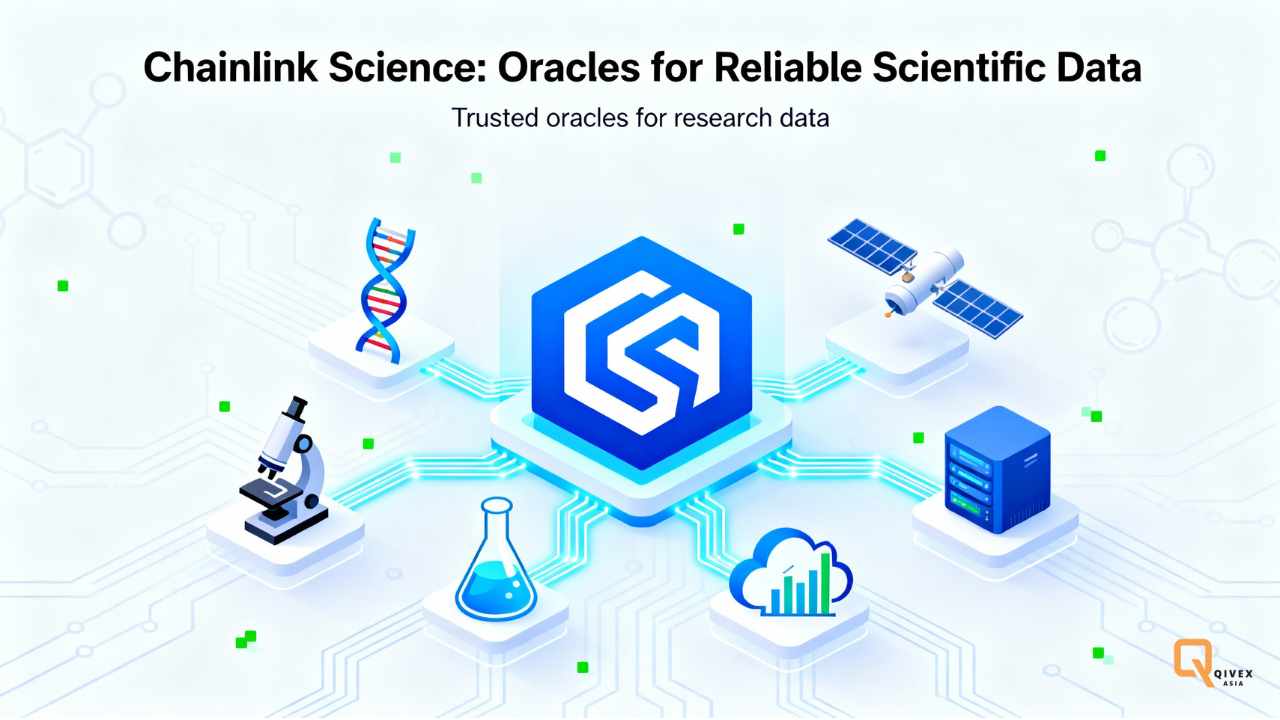
Chainlink Science: Oracles for Reliable Scientific Data

Science is facing a “Replication Crisis.” A shocking amount of published research cannot be reproduced because data is often siloed, manipulated, or simply lost in the transition between legacy databases.
We are currently trusting the result without being able to verify the process.
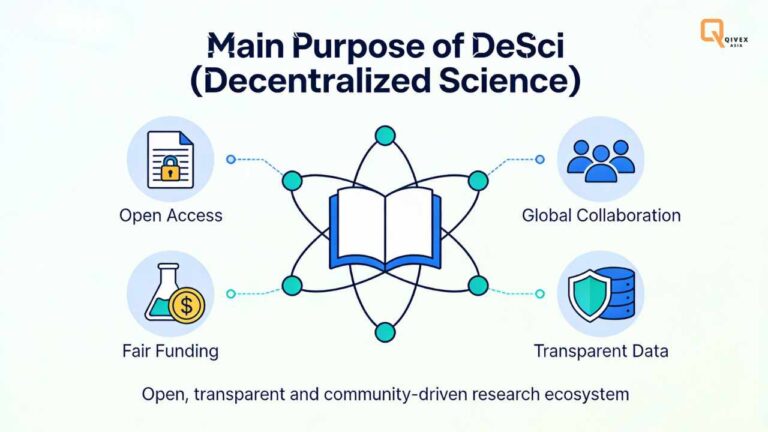
While Decentralized Science (DeSci) has made waves by democratizing funding (through DAOs), the bigger revolution is happening in data verification. But here is the catch: a blockchain is useful for storing data, but it is technically blind to the outside world. It cannot “see” what happens in a wet lab or read data from a NASA satellite.
This is where Chainlink Science comes in. By acting as the “middleware of truth,” Decentralized Oracle Networks (DONs) are bridging the gap between reliable real-world data and the Immutable Ledger.
In this guide, we explore how oracles are moving science from “Trust, but Verify” to “Verify, then Trust.”
The Oracle Problem in Scientific Research
To understand why Chainlink is necessary, we first have to understand the limitations of smart contracts.
Why Blockchains Are Blind to Lab Data
A smart contract is a digital agreement that executes automatically (e.g., “If X happens, release funding Y”). However, blockchains are isolated networks. They cannot natively make an API call to a sequencer, a server, or an IoT thermometer to check if “X” actually happened.
Think of a blockchain like a computer with no internet connection. It is incredibly secure, but it has no idea what is happening outside its own hard drive. The Oracle Problem is the challenge of getting off-chain data (like clinical trial results) onto the chain without relying on a single, centralized person to type it in (which would reintroduce bias).
The Cost of Centralized Data (P-Hacking and Bias)
In traditional research, data is often stored on centralized university or corporate servers. This allows for a dangerous practice called P-Hacking—retroactively tweaking data or statistical parameters to get a significant result after the experiment is done.
Data Insight: Early in my career working with large-scale datasets, I witnessed how “data cleaning” often blurred the line into “data massaging.” We would often exclude outliers to make the trend fit the hypothesis. If that raw data had been hashed to a blockchain immediately upon collection, that bias would have been impossible to hide. My experience confirms that Data Immutability is not just a tech feature; it’s an ethical safeguard.
The solution is to have data fed directly from instruments to the blockchain via Decentralized Oracle Networks (DONs), creating a tamper-proof chain of custody.
Core Chainlink Tools Revolutionizing Science
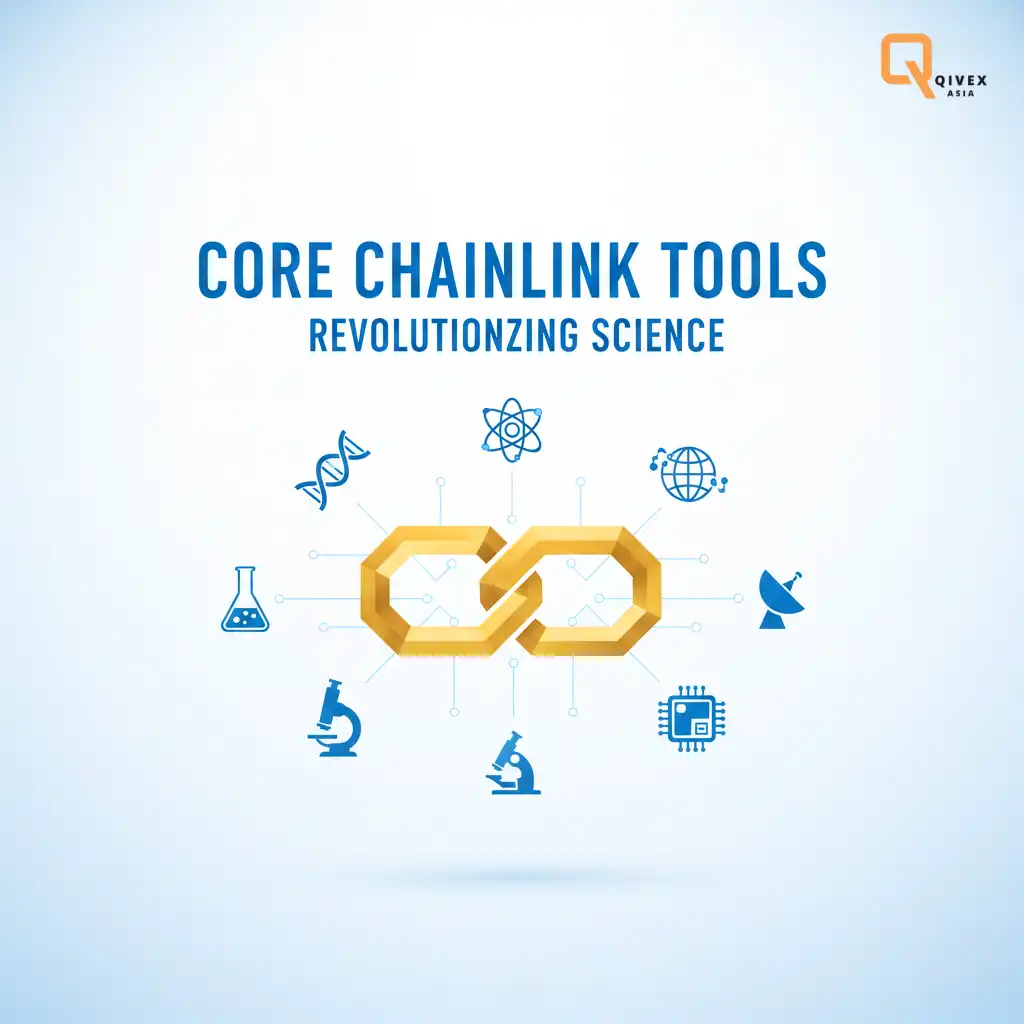
Chainlink is not a single tool; it is a suite of services that solves specific scientific bottlenecks.
Chainlink Functions: Connecting Any API to Smart Contracts
Chainlink Functions allows researchers to connect a smart contract to any Web2 API. This is the bridge that makes Smart Contract Automation possible in the lab.
Use Case: A research grant DAO can set up a contract that automatically releases the next tranche of funding only when a specific milestone is met.
How it works: The oracle queries a trusted database (like PubMed or a university repository). If the publication or data set appears, the oracle verifies it and triggers the payment on-chain. No grant committees, no bureaucracy.
Chainlink VRF: Ensuring Fair Sampling
Bias destroys research. Whether it is selecting patients for a clinical trial or assigning peer reviewers to a paper, human selection is prone to error.
Chainlink VRF (Verifiable Random Function) provides cryptographically provable randomness.
Clinical Trial Transparency: Instead of a doctor hand-picking patients (which might bias the study), VRF selects participants from the eligible pool.
Blinded Peer Review: It can randomly assign reviewers to manuscripts, ensuring no “favors” are traded behind the scenes.
DECO and Zero-Knowledge: Privacy vs. Verification
This is perhaps the most critical tool for medical research. How do you prove a patient has a rare disease (to include them in a study) without revealing their name or violating HIPAA/GDPR?
DECO (a privacy-preserving oracle protocol) and Zero-Knowledge Proofs (ZKPs) allow for this verification. A patient can generate a proof from their hospital portal that says “Yes, I meet the criteria,” and the oracle can verify this proof on-chain without the patient’s personal data ever leaving the hospital’s secure server.
Real-World Use Cases: Moving Beyond Theory
This is not science fiction. These tools are being integrated into the DeSci stack right now.
Automating Research Grants (Smart Funding)
Traditional grants take months to process. By using Chainlink Functions, funding bodies can use Quadratic Funding models (like Gitcoin Grants) where funds are distributed instantly based on verifiable milestones.
IoT and Supply Chain: Verifying Condition
For biological samples or vaccines, temperature is critical.
The Old Way: Trust the courier that the sample stayed at -20°C.
The Chainlink Way: IoT Sensor Verification. Oracles read data directly from smart sensors in the shipping container. If the temperature rises above the threshold, the smart contract automatically flags the sample as “compromised” and invalidates the data before it enters the study.
IP-NFTs and Fractionalized Ownership
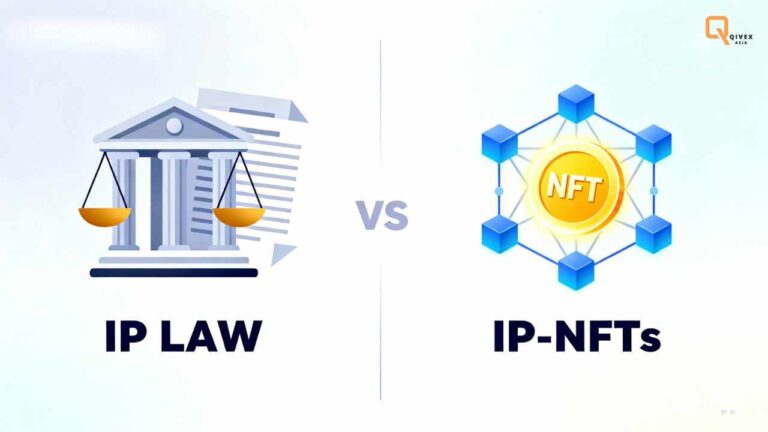
Intellectual Property (IP-NFTs) allows researchers to tokenize a patent. Instead of selling the rights to a pharma giant for a flat fee, they can issue an IP-NFT.
Royalty Streaming: Chainlink oracles track commercial usage of the IP off-chain and automatically stream royalties back to the original inventors and the DAO that funded them. This creates a sustainable loop of Bio-Data Monetization.
Challenges and the Road Ahead
While the tech is ready, the culture is catching up.
The Garbage In, Garbage Out Risk
An oracle is only as good as the data source it connects to. If the thermometer itself is broken, the oracle will faithfully transmit bad data.
Solution: We need robust Reputation Systems for data providers and multiple-oracle consensus (querying three different sensors) to filter out anomalies.
Bridging the Gap (Web2 vs. Web3)
Most universities still rely on legacy logins, not crypto wallets.
The Hurdle: Getting an Institutional Review Board (IRB) to approve a study that uses a wallet-based login is currently difficult. The user experience (UX) must improve to bridge this gap.
Conclusion: A New Era of Cryptographic Truth
We are witnessing a paradigm shift. Chainlink Science moves us from a world of “Trust, but Verify” to a world of “Verify, then Trust.”
By automating Reproducible Research and securing data via Decentralized Oracle Networks, we aren’t just making science faster; we are making it honest again. My conclusion aligns with the 2024 trends in Open Science Data Cloud initiatives: the future of research is transparent, automated, and immutable.