


Reader Disclosure
This content is created for educational and informational purposes only. It does not constitute financial, legal, or professional medical advice. While we strive for accuracy in the rapidly evolving fields of DeSci and AI, readers should conduct their own research before making decisions based on this information.
Ever felt overwhelmed by the paperwork and endless checks in integrated ISO audits? As a digital marketing consultant who’s dabbled in compliance strategies for client websites, I know the drill, juggling multiple standards like ISO 9001 for quality, 14001 for environmental management, and 45001 for occupational health can feel like herding cats.
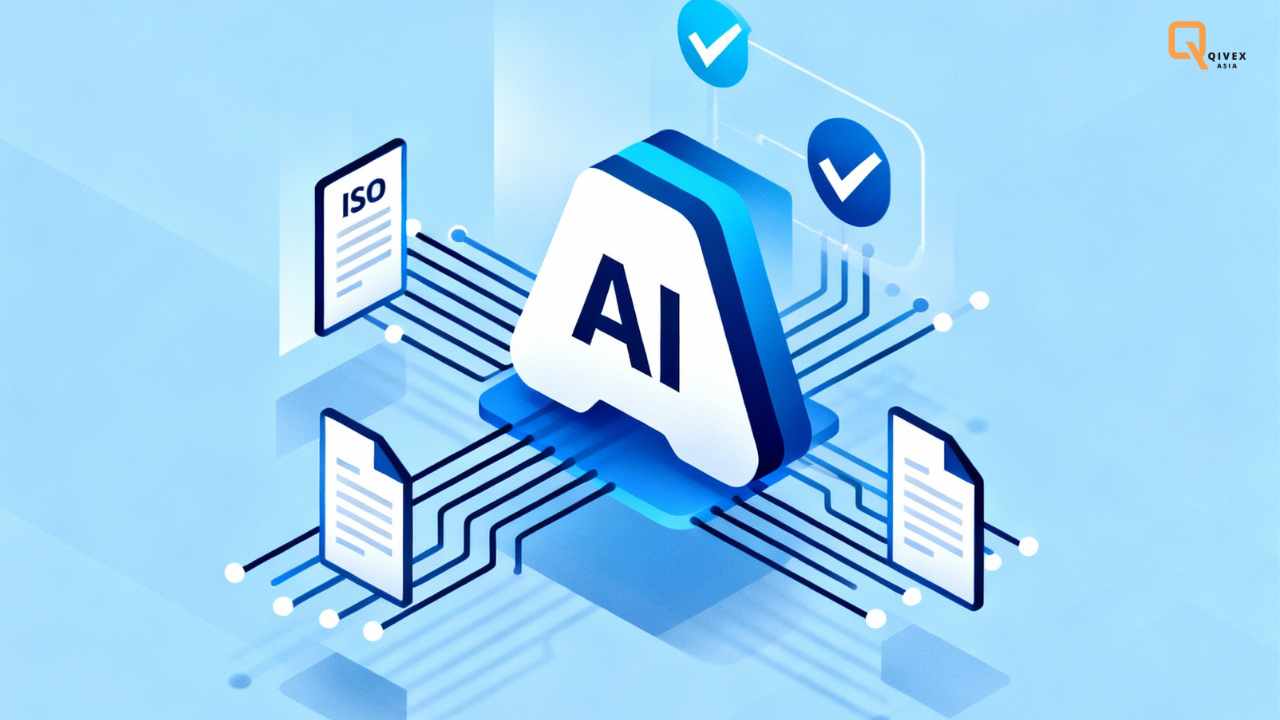
But here’s the game-changer: AI isn’t just a buzzword; it’s a smart sidekick that streamlines the whole process, making audits faster and more accurate without losing that human touch. In this post, I’ll walk you through practical steps to harness AI for your integrated management system (IMS) audits, sharing tips from real-world implementations and pitfalls to dodge.
Shares of attention are shifting fast because the compliance universe keeps expanding, with the ISO Survey 2023 counting 837,052 ISO 9001 certificates worldwide even without China’s data, underscoring how pervasive quality management has become across global supply chains. Meanwhile, enterprise functions are racing to embed AI into assurance workflows, with KPMG reporting that almost three-quarters of finance leaders already use AI in reporting and that adoption could rise to near 99 percent within three years, creating pressure to modernize audits or risk falling behind.
The controversy is simple but sharp: can generative AI speed up integrated audits across ISO 9001, 14001, 45001, and 27001 without eroding objectivity, control mapping accuracy, or evidence integrity? The outcome affects investors who demand reliable disclosures, customers who rely on certified suppliers, and employees who depend on safe, well-controlled operations in quality, environment, health and safety, and information security.
Key Data
-
ISO Survey 2023 tallied 837,052 ISO 9001 certificates, 300,410 ISO 14001, 185,166 ISO 45001, and 48,671 ISO 27001 worldwide, though China’s absence likely understates totals, signaling sustained demand for multi-standard management systems.
-
KPMG’s global finance study shows almost three quarters use AI in financial reporting now and expects adoption to reach near universal levels within three years, accelerating expectations for AI-enabled assurance.
-
The IIA’s 2023 to 2024 comparison notes sharp rises in AI adoption within internal audit functions, shifting skills and tooling toward data-driven planning and continuous coverage.
Why it matters for integrated ISO audits
Those numbers translate into heavy audit volumes, overlapping requirements, and rising expectations for timeliness, which is why Annex SL’s harmonized structure and ISO 19011’s guidance on audit programs are perfect anchor points for AI-driven integration. Unifying clause structures lets AI map shared controls and evidence across quality, environmental, safety, and security systems, while audit platforms can automate crosswalks, prefill narratives, and reduce duplicate requests to operators. As the finance function adopts AI at scale, adjacent assurance domains will feel similar pressure to compress cycle times and improve monitoring, which pushes audit teams to modernize without losing independence.
How to use AI to support integrated ISO audits: Step-by-Step
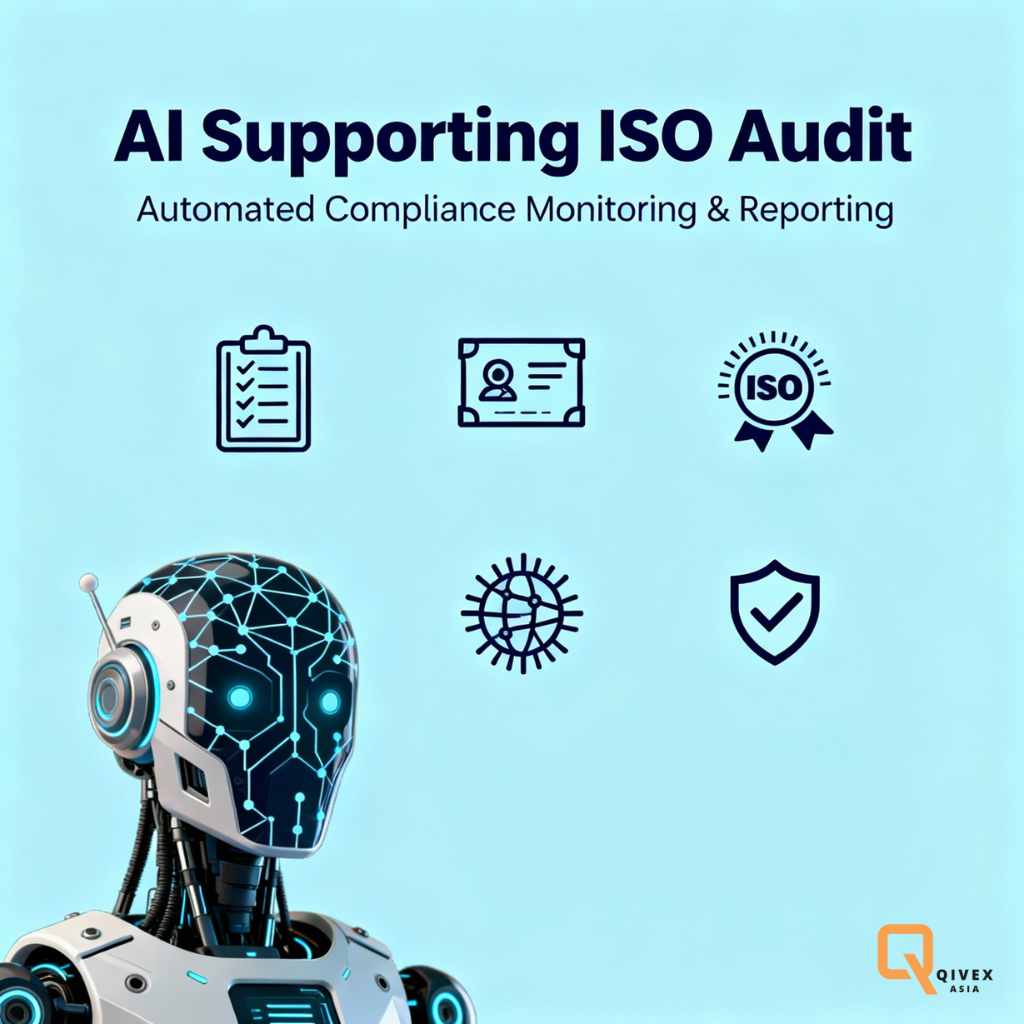
Unify control mapping with Annex SL
Annex SL standardizes the high-level structure across ISO 9001, 14001, 45001, and 27001, which gives AI a consistent skeleton for mapping shared policies, procedures, and records. Start by loading authoritative content for the applicable standards and your integrated management system, then allow an AI-enabled platform to propose cross-references among common clauses such as context, leadership, planning, support, operation, performance evaluation, and improvement.
This reduces duplicative controls and aligns objectives, while enabling a single evidence set to satisfy multiple requirements where appropriate. Platforms like AuditBoard now include AI that drafts control and risk descriptions and helps map controls across frameworks, which is a direct fit for aligning Annex SL families during integrated audits. The practical trick is to review AI-suggested mappings with experienced auditors to confirm materiality, applicability, and scoping, because overgeneralized mappings can miss domain-specific nuances in environmental aspects, OH&S hazards, or infosec risks. This smells like a win for audit readiness because process owners see fewer, better requests, and auditors can trace requirements through unified narratives and master evidence registers.
Automate risk-based audit planning under ISO 19011
ISO 19011 guides the management of an audit program, planning and conducting audits, and evaluating auditor competence, and AI augments each step with structured data, not shortcuts. Feed the platform with risk registers, incident logs, nonconformities, corrective actions, supplier scores, telemetry where available, and prior audit results, then let AI surface trends and risk hot spots for scoping. AI can propose an integrated audit plan that sequences site and process coverage across standards with a single opening and closing meeting, one plan, and one report, as ISO 19011 and integrated audit best practices envision.
ServiceNow’s Now Assist and similar agentic layers can centralize compliance data and automate documentation collection, which helps audit planners see readiness and plan sample sizes without pestering teams for every spreadsheet. Keep auditors in control of final sampling, materiality thresholds, and professional judgment because AI is only as good as the data and assumptions, and standards expect competent auditor determination. The outcome is a risk-based plan that respects independence, uses data to focus coverage, and still aligns to the integrated audit format across the combined system.
Centralize evidence intake and reduce duplicate requests
Integrated audits often fail when evidence lives in silos and each standard triggers a separate request, which frustrates process owners and slows fieldwork. Use AI-enabled intake to normalize file names, metadata, and tags, then auto-link artifacts to multiple relevant clauses across Annex SL sections. Systems like ServiceNow and AuditBoard position AI to prefill requests, ingest documentation, and map artifacts to controls or tests, which reduces interruption and operational fatigue.
Combined or fully integrated audits, as defined in ISO 19011, thrive when the same document can close multiple requirements because common clauses are recognized and auditable linkages are explicit. Add guardrails that flag stale evidence, missing approvals, or mismatched versions so auditors do not rely on outdated records. Over time, a single evidence register becomes your living system of record, streamlining surveillance cycles and recertification audits for ISO 9001, 14001, 45001, and 27001 together.
Generate narratives, test steps, and workpapers with GenAI
Generative AI can draft process narratives, control descriptions, test procedures, and initial workpapers based on prior-year files and updated requirements, but auditors must validate every artifact before use. AuditBoard highlights generative capabilities that help teams craft content, identify duplicative work, and map frameworks, which saves time on first drafts and lets subject matter experts focus on scope and rigor. Here’s the thing: the most value comes from templating integrated flows that span quality, environment, safety, and security, so GenAI learns the handoffs and shared controls.
Apply prompts that embed ISO 19011 expectations for planning and execution, then instruct the model to align to specific Annex SL clauses and cross-reference linked evidence in the register. Keep a human-in-the-loop review for independence, accuracy, and tone, and document that review in the workpaper index to demonstrate adherence to professional standards and your methodology. The result is faster narrative production, clearer linkage from requirement to control to test step, and a consistent integrated report template that avoids duplication.
Enable continuous monitoring and early anomaly surfacing
Integrated audits benefit from always-on signals that point auditors to where risk is spiking, which means connecting operational data to compliance indicators where feasible. Agentic AI inside platforms like ServiceNow can centralize data, trigger automated checks, and deliver real-time reporting on compliance status, which feeds directly into audit planning and follow-up test selection. Even simple dashboards that track nonconformity aging, corrective action closure, incident rates, supplier corrective action requests, and ISO 27001 control exceptions can drive smarter sampling and reduce surprises during the audit window.
Tie each indicator to specific Annex SL clauses and relevant standard requirements so the link from monitoring to auditing is traceable and evidence-backed. Sources say continuous monitoring will not replace audits, but it will make integrated audits more predictive by highlighting outliers earlier in the cycle. With AI sifting the noise, auditors can spend more time testing the zones that matter and less time collecting documents that never change.
Operationalize governance, model risk, and auditor skills
AI in assurance needs governance structures that define acceptable use, review checkpoints, data retention, and independence boundaries so the tool never becomes the auditor of record. The IIA’s evolving guidance and comparisons from 2023 to 2024 show internal audit functions increasing their AI literacy and codifying policies on use, which helps maintain objectivity. Build a model risk checklist for GenAI use in audits that covers training data provenance, prompt and output logging, bias checks, and legal reviews, then train auditors to challenge AI outputs like any other evidence source.
ISO 19011 expects demonstrable auditor competence, so incorporate AI proficiency into your competency framework and training plan without diluting core process, risk, and control expertise. ServiceNow and AuditBoard both expand AI features on a steady beat, which means audit leaders should set an update cadence to test changes in a sandbox and refresh method docs and templates. Keep change control tight and document exceptions because certification bodies will ask how you ensure tools do not compromise the integrity of your audit outcomes.
Professional Tips for Success
From years in digital compliance, here’s what works:
-
Train your team early: Short workshops on AI ethics ensure audits stay unbiased and aligned with standards like ISO 42001.
-
Scale gradually: For industries like manufacturing, integrate AI with IoT for real-time ISO 45001 safety data; in services, focus on customer metrics for 9001.
-
Measure ROI: Track metrics like audit time reduction (often 30-50%) and error rates to justify investments.
Adjust for varying needs: Non-profits might prioritize cost-free tools, while tech firms layer in advanced ML for ISO 27001 cyber audits.
Common Mistakes to Avoid in AI-Supported Audits
Don’t let excitement lead to errors. Here are pitfalls I’ve seen (and fixed) in compliance projects:
-
Ignoring data privacy: AI tools must comply with GDPR or ISO 27701; anonymize inputs to avoid breaches.
-
Skipping human oversight: AI flags issues, but auditors, who interpret them, can miss subtle risks.
-
Underestimating setup time: Rushing integration leads to inaccurate models; allocate 20% of your audit cycle for AI tuning.
By steering clear, you’ll ensure your integrated ISO audits are robust and future-proof.
FAQ: Answering Your Questions on AI in Integrated ISO Audits
Got questions? I’ve compiled these based on common queries from compliance pros.
What exactly are integrated ISO audits, and how does AI fit in?
Integrated audits cover multiple standards in one go, like quality and environment. AI automates cross-checks, ensuring holistic compliance without silos.
Which AI tools are best for beginners in ISO audits?
Start with user-friendly ones like Microsoft Power BI for analytics or Notion AI for document summaries, easy to integrate with basic IMS setups.
How do I prepare my organization for AI-assisted audits?
Audit your data quality first, then train staff on tools. Focus on clean inputs for accurate AI outputs, especially for standards like ISO 9001.
Can AI replace human auditors in ISO processes?
No, AI handles automation, but humans provide context and final calls, as emphasized in ISO 42001 for responsible AI use.
What about substitutions if my budget is tight?
Swap enterprise tools for free alternatives like Google Cloud AI or open-source TensorFlow for risk modeling, effective for small-scale integrated audits.
How should I store and maintain AI-generated audit data?
Use secure cloud storage compliant with ISO 27001, with regular backups and access logs to preserve integrity for future reviews.
Closing Thought
If AI shrinks audit timelines and lifts assurance quality across integrated ISO scopes, will certification bodies respond by tightening expectations on continuous monitoring and evidence integrity to keep the bar high?