



Reader Disclosure
This content is created for educational and informational purposes only. It does not constitute financial, legal, or professional medical advice. While we strive for accuracy in the rapidly evolving fields of DeSci and AI, readers should conduct their own research before making decisions based on this information.
Pfizer Ventures backed a 4.1 million dollar raise into longevity-focused VitaDAO, signaling that corporate R&D is now testing community-led science at scale, and it was not a one-off headline grab; it followed active governance participation by the pharma giant inside the DAO’s proposals, too.
Meanwhile, DeSci funding mechanisms like Gitcoin have already routed hundreds of thousands of dollars in matching-backed grants to dozens of research projects, pointing to a repeatable pipeline that goes beyond hype cycles and into workflows that scientists can actually use.
Here’s the thing: this movement touches more than crypto natives because it rewires incentives for researchers who need faster peer review, philanthropists who want transparent impact tracking, and investors exploring tokenized IP as a new risk-return sleeve in their portfolio, even if some still roll their eyes at Web3.
The controversy is simple enough to state and hard to resolve: can blockchains, DAOs, and tokens fix science’s funding bottlenecks, paywalls, and replication crisis without importing new forms of governance debt and speculation, or is DeSci a glossy rebrand of open science with extra steps?
After the peak of early Web3 hype, DeSci blends permissionless funding, token-aligned incentives, and transparent publishing to push science into a more open, auditable, and faster cycle where communities co-own problems and IP, not just papers.
Funding moves through DAOs and quadratic grants, peer review is compensated and tracked, and IP can be tokenized for broader participation in translation, which together aim to shrink the “valley of death” between discovery and deployment while keeping research verifiable on-chain or in open repositories. Skeptics note leadership gaps and uneven DAO features across projects, yet the stack is maturing in ways traditional pipelines cannot easily replicate.
Key Data
-
VitaDAO reports 4.2 million dollars deployed across 24 research projects, with a community in the five figures, illustrating an end-to-end DeSci funding and IP tokenization loop that is already in market, not theory.
-
The genesis DeSci round on Gitcoin attracted 2,309 donors who crowdfunded 67.9 thousand dollars and unlocked over 567 thousand dollars with matching, creating a template for recurring, community-led scientific funding rounds.
-
ResearchHub pays 150 dollars in ResearchCoin to peer reviewers, reducing review time while incentivizing open, transparent feedback cycles that speed iteration without cutting rigor, according to the foundation’s own data releases.
Connecting the Dots
Taken together, these signals mark a shift from aspirational manifestos to operating rails that let researchers get funded, get reviewed, and get to commercialization faster with fewer gatekeepers and more transparent governance. This smells like incentive reform in action, even if some metrics remain small relative to national science budgets and many organizations still blend traditional structures with DAO-lite governance to get work done.
If 2024 was about pilots and proofs, 2026 looks like the first real test of whether tokenized IP, transparent funding, and paid peer review can scale beyond a handful of standout communities such as VitaDAO, ResearchHub, and Gitcoin-backed cohorts.
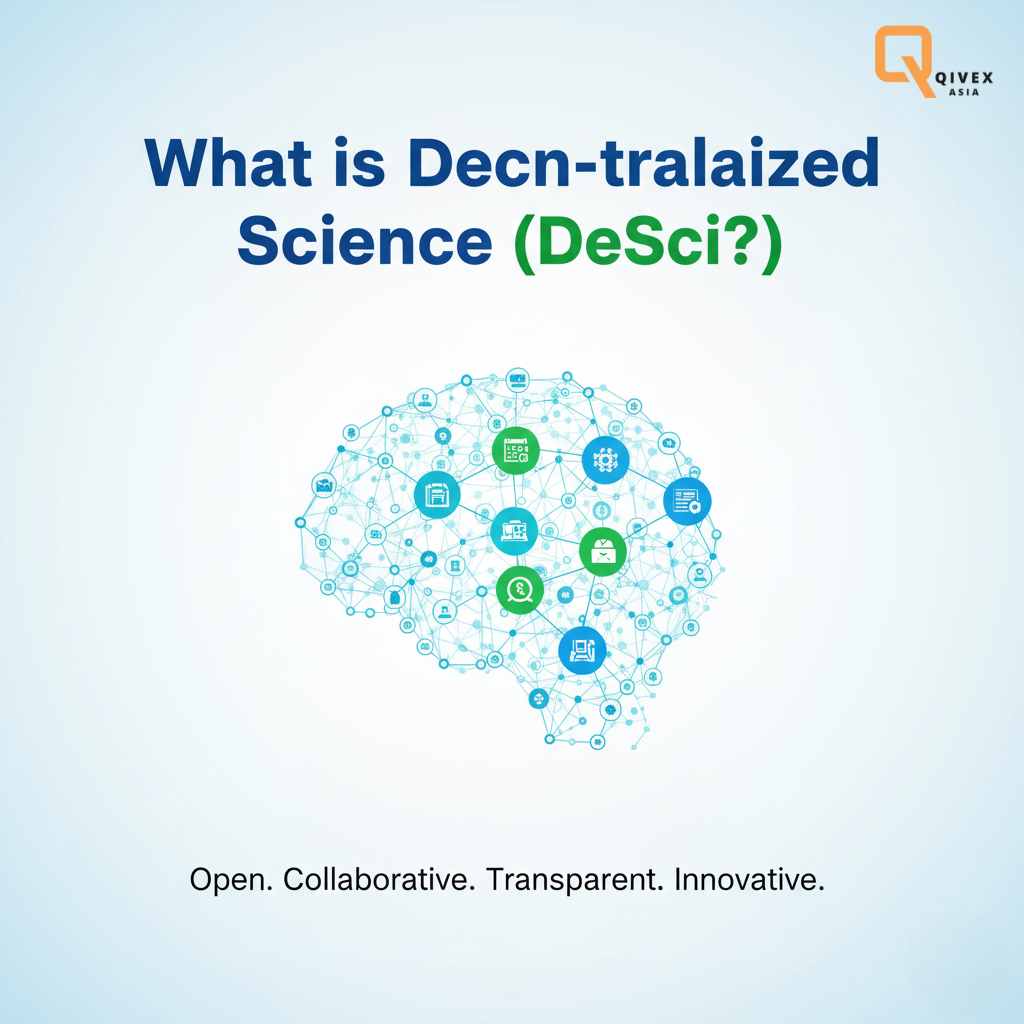
What is DeSci?
At its core, DeSci introduces a decentralized, transparent, and incentive-aligned infrastructure for the scientific process by adapting proven Web3 primitives, including blockchains, DAOs, tokens, and smart contracts, to fund, govern, review, and disseminate research in the open. The goal is not to replace science but to upgrade its rails so work is auditable, rewards are aligned with contributions, and access barriers fall for both data and funding.
DeSci builds on decades of open science by adding programmatic incentives and collective ownership of assets and outcomes, which is why tokenized IP, retroactive rewards, and quadratic grants matter here. Even supporters admit the stack needs careful design to avoid speculation eclipsing substance, yet the model gives underfunded, high-risk fields a path to sustained community backing.
What Changes Now?
-
Funding: DAOs and quadratic grants distribute smaller checks faster, while matching fills in the mid-market, and tokenized IP creates liquid exposure to translational assets that traditional grants often cannot reach.
-
Publishing: Paid and transparent peer review speeds feedback loops while on-chain attestations and open repositories track provenance, replication, and credit beyond a single PDF or paywall.
-
Governance: Token voting, community mandates, and open roadmaps make tradeoffs legible, though many projects still run hybrid models instead of full DAO implementations to keep execution crisp.
Decentralized Science (Desci) Step-By-Step 2026 Guide
Step 1: Grasp the Stack and Where It Fits
Start by mapping core primitives to pain points: blockchains handle provenance and auditable funding flows, DAOs coordinate decision rights, and tokens align incentives across contributors who write, review, replicate, and translate results. If the problem is slow, centralized funding, prioritize DAO mechanisms and quadratic grants; if it is bottlenecked peer review, focus on paid, transparent workflows that reward quality and speed without sacrificing standards.
For replication and data access, combine open repositories with on-chain attestations so contributions are verifiable and rewards can follow work, not status. Use existing platforms before building new ones because network effects matter more than bespoke tooling in small ecosystems. Chainlink’s overview and Coinbase Learn both give clear primers on how these components meet scientific constraints, and they are good starting points for non-crypto researchers and patrons.
Step 2: Choose a Funding Path and Run a Pilot
Teams should compare community grants, DAO treasuries, and matching rounds to fit timelines and risk, since each unlocks different kinds of capital and governance oversight. Gitcoin rounds can fund early experiments with public matching and community discovery, which is useful for de-risking before a larger DAO proposal or institutional partnership, especially in underfunded niches.
If the work is translational with IP potential, engage projects like VitaDAO and Molecule for IP-NFT design and tokenized asset pathways that keep upside tied to community governance rather than closed licensing alone. Start small with clear milestones, public progress updates, and explicit replication plans so backers see momentum and can verify claims across preprints and labs. The objective is to turn momentum into compounding support by proving that open processes and incentive tools shorten cycles from hypothesis to impact.
Step 3: Publish With Transparent, Paid Peer Review
Shift from “submit and wait” to publish-discuss-revise cycles that compensate reviewers and document decisions in the open, so feedback arrives in weeks, not months, and the community can audit methods and data. ResearchHub’s model pays reviewers in RSC and aligns rewards with constructive, timely reviews, which early evidence suggests cuts time to feedback while preserving rigor by tying compensation to quality signals and replication-friendly practices like pre-registration and open data.
Complement this with clear on-chain or off-chain attestations that link datasets, code, and protocols to identities and timestamps, which reduces provenance disputes and supports reuse, meta-analysis, and reproducibility audits. Pair incentives with culture by normalizing replication bounties and credit for negative results, drawing on open science literature that shows reproducibility benefits from shared standards, resources, and community norms. For labs and journals, start by piloting paid review on a subset of submissions and measure cycle time, review quality, and downstream citations before you scale.
Step 4: Tokenize IP With Care, or Don’t
Tokenized IP can widen participation in translational research and create liquid exposure to assets, but it is not a universal fix and demands careful governance, legal design, and communications so contributors understand rights, duties, and risks. VitaDAO’s approach demonstrates how a community can fund early-stage longevity work, explore IP token pools, and recycle proceeds to seed more projects, but the path blends crypto governance with classic licensing and partnerships to move assets toward the clinic.
Teams should define trigger points for tokenization, such as after specific milestones, de-risk core science, and align IP economics so patient communities, labs, and backers share in upside without confusing claims or expectations. Where tokenization does not fit, do not force it; you can still run open funding, paid review, and transparent data workflows that deliver most of DeSci’s benefits without an IP token. This is one place where hybrid models and old-fashioned contracts remain a feature, not a bug, at least until playbooks mature and regulation clarifies best practice.
Step 5: Build for Real Users, Not Vibes
Adoption hinges on solving day-one problems for scientists and funders, so optimize for fewer clicks to funding, faster feedback, and clearer credit rather than maximal on-chain purism that adds friction without adding value. Use community platforms and events to recruit reviewers, donors, and collaborators, and then keep them through reliable communications, stable payouts, and simple dashboards for progress and impact.
Universities and institutes can join through low-risk pilots that plug in open data, replication bounties, and paid reviews while preserving their compliance and ethics frameworks, which aligns with the broader open science agenda that accelerated during COVID.
If computing or data is the bottleneck, look to emerging decentralized compute and storage providers in the DeSci orbit that promise transparent costs and interoperable infrastructure for heavy workloads, but test service quality before fully switching. Above all, publish results and failure modes so others can reuse playbooks, because compounding only happens when the ecosystem can learn in public.
People of Interest or Benefits
A Dao Steward’s View
“2022 was a highly successful year for VitaDAO, and the quality of research we have seen has been impressive,” said VitaDAO dealflow steward Laurence Ion, reflecting on projects that moved into clinical trials and DAO-native commercialization pathways that aim to recycle proceeds back into more longevity work.
The context for that optimism is not a moonshot without revenue but a structure that has already deployed millions of dollars into more than twenty research efforts and now explores tokenized pools as a sustainability engine rather than a one-off grant, which is why traditional and Web3 funders watch this model closely.
Critics will say pharma interest could be PR, yet Pfizer’s participation, governance voting, and ongoing ties suggest a more serious exploration of how communities can co-own translational risk while corporates bring scale and regulatory muscle when assets mature. For scientists, the benefit is obvious if it works: more shots on goal, quicker cycles, and a route to keep community alignment across licensing rather than losing control at the handoff.
An Academic Lens on Desci
Frontiers in Blockchain researchers define DeSci as “a collaborative and decentralized approach to science” that leverages DLT, Web3, cryptocurrencies, and DAOs to enable permissionless participation, collective governance, shared ownership, and transparent funding across the scientific process, which is the plainest, least promotional definition on offer so far.
Their 2023 landscape survey finds Ethereum dominant, hybrid structures common, and funding limited for many projects, with leadership challenges slowing some teams, a sober reminder that governance and cash still decide outcomes in early ecosystems. The study also connects DeSci to open science, positioning it as an incentive and infrastructure upgrade rather than a wholesale replacement, which aligns with OECD’s broader push for open data, reproducibility, and stakeholder inclusion after the COVID-era shift.
From this vantage, the biggest benefit for academia might be the ability to pay reviewers, reward replication, and track provenance, which ties cultural reforms to concrete rewards rather than pious exhortations alone.
Looking Ahead
Funding Mechanics Get More Modular
Analysts now predict that community rounds and DAO treasuries will continue to co-exist with institutional and philanthropic capital, but with clearer roles and quarterly cadence so teams can plan important milestones around public matching windows and DAO proposal cycles instead of lurching from pitch to pitch. Expect stewards to professionalize selection and reporting, with more open scorecards, progress dashboards, and replication bounties that make it easier for donors to track impact across labs and time, not just at the flashy announcement moment.
If that happens, the small-dollar base broadens, and mid-stage financing can flow from communities into translational vehicles with tokenized IP or classic licensing held in transparent structures, giving biotech and hard science a sturdier bridge over the valley of death. The tradeoff is that hybrid governance will probably persist because few labs want to run full on-chain everything, and that is fine if the user experience and incentives keep improving with each cycle, not just the rhetoric.
Infrastructure, Identity, and Regulation Mature Together
The next wave will likely focus on identity, attribution, and compute, with universities and public bodies integrating open data policies and reproducibility guidelines into DeSci workflows so findings travel farther with fewer conflicts over ownership and privacy. Expect more enterprise-grade education resources from Web3 infra teams and academic centers so researchers can plug into decentralized storage, attestation, and compute networks without becoming protocol engineers, which lowers switching costs at the lab level.
Project directories and dashboards will keep mapping the space so newcomers do not have to guess who is active or trustworthy, a mundane but critical service in any young market that aspires to last longer than one hype cycle. If regulators clarify tokenized IP and community governance boundaries, legal risk recedes, and mainstream partners can run more ambitious pilots without fearing that compliance will blow up their timelines, which is when adoption tends to accelerate.
Closing Thought
If communities can pay for breakthroughs, prove them in the open, and share the upside without losing scientific integrity, will boards and grant makers shift their default R&D playbooks to meet the public where it already votes with capital and attention, or will they wait until the best assets have already been spoken for by tokenized science stewards, sources say?
Sources referenced: Chainlink, Coinbase Learn, Frontiers in Blockchain, VitaDAO, Blockworks, Forbes, ResearchHub Foundation, Gitcoin, OECD, Cointribune, Aethir, University of Nicosia.