


Reader Disclosure
This content is created for educational and informational purposes only. It does not constitute financial, legal, or professional medical advice. While we strive for accuracy in the rapidly evolving fields of DeSci and AI, readers should conduct their own research before making decisions based on this information.
Shares of AI infrastructure suppliers surged after fresh forecasts showed hyperscalers on track to spend about a billion dollars on AI data centers in 2025, with a glide path toward more than a billion dollars by 2032, setting a ferocious pace for tooling and frameworks that promise faster build cycles and lower inference costs.
OpenAI’s annualized revenue hit a billion dollars in June 2025, a signal that enterprise demand is real and that the stack around large language models is maturing, from orchestration layers to retrieval, observability, and guardrails.
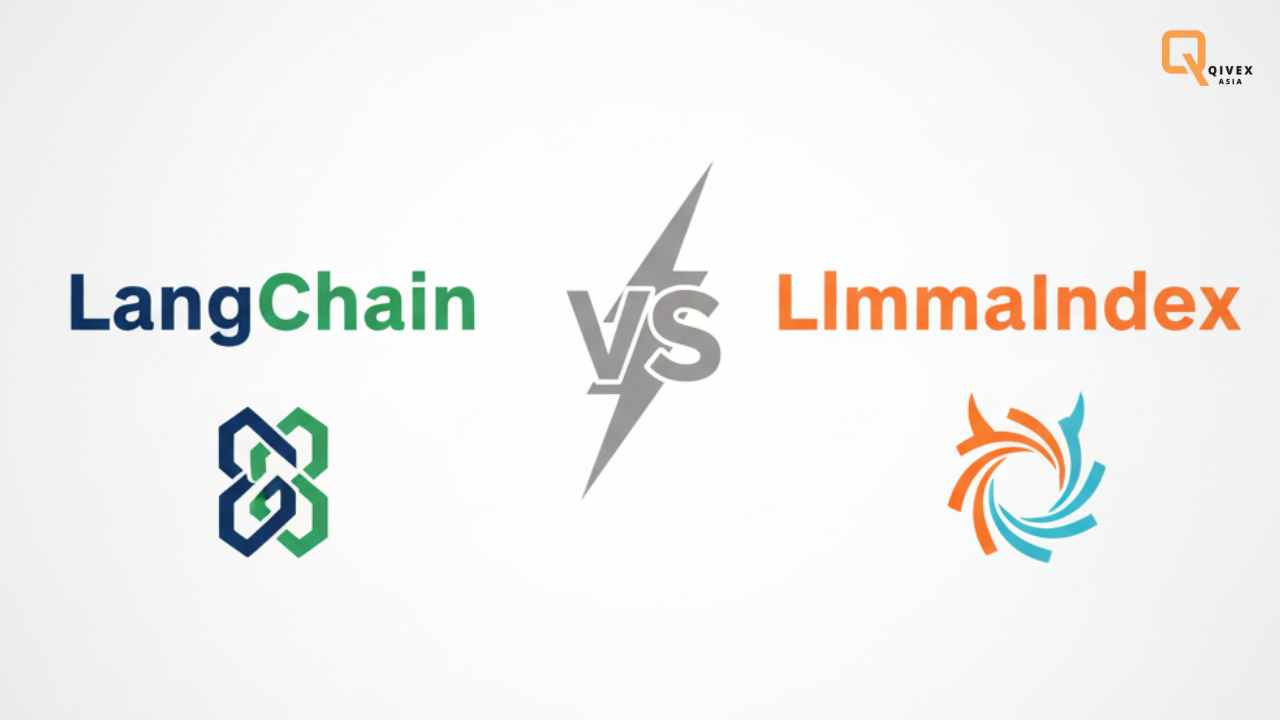
Here is the thing: as AI apps move from prototypes to production, builders are choosing between LangChain’s agent-focused ecosystem and LlamaIndex’s data framework and managed LlamaCloud, a split that touches investors betting on platform moats, developers under time pressure, and teams accountable for security, compliance, and unit economics.
RAG has effectively moved from experiment to standard in many enterprises, which turns what used to be library choices into strategic platform bets on integration depth, workflow control, and governance across clouds.
Short Answer
After the hype peak, AI apps now pair mature RAG patterns with agent orchestration to unlock reliability and scale, and that is where the LangChain and LlamaIndex choice matters most, since LangChain concentrates on agent graphs and observability while LlamaIndex centers on data pipelines, parsing, and retrieval with a managed cloud option.
In practice, teams pick the framework that fits their constraints, such as data connectors, evaluation, security posture, and cost control, rather than ideology. This smells like a classic platform convergence story, but near-term, both camps have room to win on different jobs to be done.
Key Data
-
Hyperscalers are projected to spend billion dollars on AI infrastructure in 2025, rising to over billion by 2032, according to Bloomberg Intelligence, which elevates demand for production-grade frameworks and evaluation tools in the application layer.
-
OpenAI’s annualized revenue run rate reached billion dollars as of June 2025, excluding Microsoft licensing, underscoring the scale of enterprise and developer usage that flows into orchestration and retrieval ecosystems around LLMs.
-
The vector database market was valued at around billion dollars in 2024, with a projected CAGR through 2034, reflecting how similarity search and RAG infrastructure are becoming a durable part of the data stack.
Why Does the Data Tie to the Framework Choice
-
Rising AI capex and application revenue mean more pressure to ship reliable agents, which amplifies the need for observability, graph control, and workflow tooling that LangChain and LangGraph target.
-
As RAG cements itself in enterprise patterns, LlamaIndex’s deep focus on parsing, connectors, and retrieval management, including LlamaCloud for managed pipelines, becomes a direct lever on time to value and governance.
-
Vector database growth indicates that indexing strategy, embeddings, and query planners are moving from nice to have to core design, which both frameworks support through integrations, but with different defaults and abstractions.
Langchain vs. Llamaindex: Step-By-Step Guide
1. Define the Job, Constraints, and Success Metrics
Start by writing down the job to be done, such as customer support summarization or internal knowledge search, and the constraints, like data residency, latency budget, and allowed model providers, since those drive framework fit more than any tutorial does. If the system will operate as an agent with multiple tools, human-in-the-loop gates, and stateful plans, LangChain plus LangGraph’s graph-based control over agent state is a strong default to evaluate.
If the workload is document-heavy, with complex parsing, source tracking, and retrieval policies, LlamaIndex’s data-first core and optional LlamaCloud services can reduce glue code and operational toil. Define how success will be measured, such as groundedness, answer coverage, and cost per query, then align framework capabilities to those targets up front.
2. Connectors, Parsing, and Data Readiness
The fastest path to robust RAG is good ingestion and parsing, so check native connectors and parsing quality for PDFs, Office, and HTML before writing custom extractors, since bad chunks or missed tables will quietly erode accuracy.
LlamaIndex highlights LlamaParse for complex layouts and claims hundreds of millions of documents processed, which can matter in regulated document workflows or messy enterprise archives. LangChain integrates with many loaders and vector stores, and its community ecosystem includes dozens of third-party packages that handle common sources, but the parsing emphasis is less opinionated by design.
Teams that want a managed pipeline can adopt LlamaCloud for indexing and retrieval as a service, while teams preferring infra control can keep everything in code with either library and a chosen vector database.
3. Indexing Strategy, Embeddings, and Stores
Pick an indexing strategy that matches query patterns, for example, hierarchical chunking for long manuals or metadata-enriched nodes for fine-grained filters, and test embedding models for recall on domain samples since defaults vary in quality by corpus. Both frameworks offer integrations with leading vector stores, and the expanding market shows that store choice is now a cost and performance lever that merits A/B testing, not a one-time guess.
LlamaIndex encourages explicit index constructs and retrieval pipelines, while LangChain encourages composable chains where retrieval is one component, and either path can reach parity with clean configuration and eval. For enterprises, consider where encryption, tenancy, and PII handling live, either in the vector store or in an intermediate policy layer, to satisfy audit and privacy rules.
4. Orchestration, Tools, and Agents
When the app needs tool use, multi-turn planning, or delegated sub-tasks, LangChain with LangGraph’s event and state model offers graph-based orchestration that is easy to reason about in production, and that structure can cut down on agent flakiness. LlamaIndex now ships Workflows for event-driven agent control and supports composable modules for tools and retrieval, which keeps the developer surface consistent for data-first applications that evolve into agents.
The choice often comes down to whether the mental model should be agent first with graphs and traces, or data first with indices, retrievers, and policies layered in, and both models are valid with the right observability. Here is the thing: tool integration depth with providers like OpenAI, Anthropic, and popular vector databases is strong on both sides, so pilot the orchestration style, not just the SDK surface.
5. Evaluation, Observability, and Safety
Reliable apps need systematic evaluation and tracing, which is why LangChain’s platform focuses on reliability and tooling around the agent lifecycle has found traction in production teams that must debug prompts, track costs, and watch latency. Industry reports note that RAG has become a commodity pattern, which means the differentiator shifts to how well a team measures groundedness, mitigates hallucinations, and enforces policies, not whether they can wire a retriever to a model.
LlamaIndex’s workflows and managed cloud help standardize ingestion, indexing, and retrieval, which reduces silent regressions from upstream data drift and parsing errors, and that can be a practical path to higher groundedness. Whichever direction is chosen, bake in eval harnesses early and keep traces for every user flow, since that is the difference between a demo and a durable product in this cycle.
6. Deployment, Cost, and Governance
As hyperscaler capex climbs, unit economics will keep swinging with model pricing and hardware supply, so plan for model flexibility, caching, and selective retrieval to control spend, regardless of framework. Vector store choices affect both query latency and cost profiles, especially under bursty loads, which puts pressure on index design, sharding, and filter strategies that frameworks can help configure but cannot automate away.
LangChain’s ecosystem gives optionality across clouds and model providers, while LlamaIndex plus LlamaCloud can simplify managed operations for teams that prefer a service boundary for ingestion and retrieval, and either path can satisfy governance if policy layers are explicit. To be honest, this is where security teams will push for auditable flows and clear data boundaries, so landing zones and RBAC must be part of the design, not a late add.
People of Interest or Benefits
1. Investor View, Data First Power User
“LlamaIndex is compelling for Norwest as we’ve been closely studying enterprise requirements for AI adoption, specifically around data preparation, ingestion, and custom agents as part of an ongoing investment thesis,” said Dave Zilberman, general partner at Norwest, who also cited production accuracy, scaling complex data workflows, and an agentic enterprise vision as reasons for the firm’s investment.
That framing matches the reality that many enterprises are moving from toy demos to compliance-aligned deployments where ingestion, parsing, and retrieval are not nice-to-have chores; they are the product backbone. With LlamaCloud in general availability, LlamaIndex is positioning itself as a managed choice for secure and private knowledge agents, including SOC 2 Type 2 and EU residency options, which answers a procurement question that derails many pilots.
The headline adoption claims, more than three million monthly downloads and about forty thousand GitHub stars, suggest a developer base large enough to sustain ecosystem maturity and real-world feedback loops. Here is the thing: investors like platform stickiness, and data pipelines are sticky when they work, which is why this thesis resonates in 2025.
2. Builder View, Agent First Workflow
LangChain calls itself “the platform for reliable agents,” and its ecosystem now spans core libraries in Python and JavaScript, LangGraph for graph-based agents, and tooling to build and monitor production-grade LLM applications, which speaks directly to teams that need orchestration clarity and debugging depth. In plain English, that means complex assistants with tools, retrieval, and human review can be modeled as graphs with explicit state, which improves testability and incident response in production.
This orientation lines up with the path many startups and enterprises take, starting with a retrieval workflow, then adding tools, memory, and policies as they graduate to agentic systems, rather than leading with data plumbing alone. Sources say this agent-centric pitch is resonating because it simplifies how teams talk about reliability with executives and SOC reviewers, instead of getting lost in power user configuration for each component. The pragmatic view, both ecosystems integrate broadly, and the real win is whichever makes production behavior observable and controllable under load.
Looking Ahead
1. Market Consequences
Bloomberg Intelligence expects AI infrastructure spending by the biggest tech firms to exceed 500 billion dollars annually by early next decade, a flow of capital that reinforces platform moats and accelerates consolidation around a few orchestration and retrieval patterns. For application builders, that translates to lower model costs over time, more powerful multimodal interfaces, and stronger cloud native primitives that frameworks can hook into, from serverless vector stores to managed eval services.
Bloomberg also projects that generative AI could reach into the trillions in annual revenue by 2032, which implies that buyers will demand dependable metrics, stable SLAs, and clear data provenance, areas where LangChain and LlamaIndex already compete on reliability stories.
Expect procurement to push harder on certifications, data residency, and vendor lock-in, and expect platform teams to ask for model routing and cost controls that can be proven in traces, not slides. The consequence is simple: frameworks that shorten the path from prototype to audited production will capture an outsized share in this wave.
2. Product Consequences
InfoQ’s 2025 trends report frames RAG as increasingly commoditized in enterprise apps, which shifts competitive energy to orchestration quality, retrieval policy control, and evaluation fidelity across domains like support, research, and analytics. Vendor research and field notes suggest many enterprises now allocate thirty to sixty percent of GenAI use cases to RAG patterns, which implies indexing and retriever policy will sit beside prompts as first class artifacts in production.
Given the vector database market’s steady growth, product teams will standardize on a handful of stores and embed evaluators that measure recall and groundedness across datasets during CI, not only in notebooks.
The net is that developer experience will matter less at the hello world stage and more at the weekly delivery cadence, where trace stability, cost per answer, and red teaming pipelines decide if features ship. Teams that blend agent graphs or workflows with rigorous data pipelines and eval will get the step change in time to value that leadership is now measuring in quarters, not years.
Closing Thought
If AI capex and enterprise adoption keep compounding, will the winning framework be the one that feels nicer to code, or the one that proves reliability and governance at scale when the board asks for evidence?