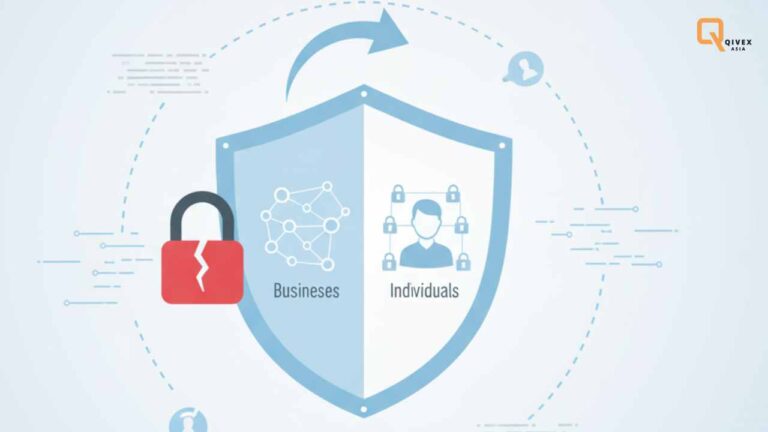

DNS Security: Preventing Hijacking and Spoofing

Between March and September 2024, Palo Alto Networks’ Unit 42 processed over 29 billion new DNS records and identified 6,729 as active DNS hijacking events, a reminder that attackers increasingly aim at the naming layer to quietly reroute users and siphon data before anyone notices.
Verizon’s 2025 DBIR also highlights a structural shift in attacker behavior, with third‑party breaches doubling to roughly 30% and edge device exploitation rising almost eightfold, widening the attack surface where trade secrets and product roadmaps often sit behind brittle controls, sources say.
That matters to investors who bet on defensible moats, to employees whose livelihoods depend on hard‑won know‑how, and to consumers whose trust evaporates when a brand loses control of its secret sauce. CISA’s push for Protective DNS shows how policy and practice are converging, effectively making DNS the enterprise’s earliest interception point against hijacking, spoofing, and exfiltration before a TCP session ever begins.
The fastest, highest‑leverage move to protect intellectual property from cyber espionage is to harden DNS end‑to‑end: lock registrar accounts with registry lock and MFA, deploy DNSSEC with disciplined DS record management, route egress through Protective DNS that enforces encrypted DoH/DoT, and monitor DNS telemetry for policy violations and anomalies tied to exfiltration and takeover patterns.
Here’s the thing: DNS is both a control point and an early‑warning system, so treating it as a security product rather than plumbing reduces the likelihood that adversaries can redirect R&D users, poison resolvers, or clone portals for credential theft at scale. Pair that with disciplined patching on edge appliances and vendor domains, since DBIR 2025 shows sharp growth in third‑party and edge exploitation that often becomes the staging ground for IP theft and stealthy DNS manipulation downstream.
Key Data
Unit 42 found 6,729 DNS hijacking records across 29 billion new DNS records between March 27 and September 21, 2024, averaging 38 confirmed hijacks per day, underscoring the operational frequency of naming‑layer compromise.
The 2025 DBIR analyzed more than 22,000 incidents and over 12,000 confirmed breaches, with third‑party breaches around 30% and edge device exploitation jumping nearly eightfold year over year, shifting risk toward suppliers and gateway infrastructure that often sits adjacent to IP workflows.
An IDC study cited in 2024 reported found 88% of organizations suffered one or more DNS attacks with an average of seven per year, reinforcing that DNS is not a niche vector but a routine pathway for disruption, spoofing, and data theft that can precede IP exfiltration.
Why This Ties to DNS Security
DNS sits upstream of almost every digital interaction, so it is uniquely capable of preventing users and systems from ever reaching adversary infrastructure when protective resolvers, DNSSEC validation, and policy enforcement are in place. Conversely, if attackers hijack registrar accounts, poison caches, or trick resolvers, they can redirect engineers to credential‑harvesting clones, sink emails bound for code repositories, and quietly stage IP exfiltration, all before endpoint controls consider the connection suspicious.
That is why CISA’s Protective DNS, NIST’s updated secure DNS guidance, and ICANN’s push for reliable DNSSEC deployment and DS record handling are now core controls for protecting trade secrets, algorithms, and design files from espionage operations that thrive on silent redirection and DNS‑layer deception.
DNS Security: Preventing Hijacking and Spoofing (Step‑by‑Step Guide)

1. Lock Down the Registrar and DNS Authority
Treat registrar and DNS control planes as Tier‑0 identities with mandatory MFA, hardware security keys, IP allow‑listing, and strict role separation so a compromised admin account cannot push global name server or A/AAAA changes without secondary approval.
Apply registry lock where supported to freeze top‑level changes unless out‑of‑band procedures are followed, closing the door on quick hijacks via social engineering at the registrar help desk that bypass internal change control.
Inventory all authoritative zones and sub‑delegations, then monitor for unauthorized NS and DS record changes; adversaries often flip NS records to attacker‑controlled infrastructure or break DS chains to disable DNSSEC silently.
Establish a daily digest that compares prior and current records for critical domains; Unit 42’s evidence shows hijackers frequently swap IPs, NS, and MX in bursts to capture logins and emails tied to build systems and collaboration tools, which is how espionage groups pivot into IP vaults.
2. Deploy Dnssec End‑to‑End With Disciplined Ds Record Management
Follow NIST SP 800‑81r3 guidance to sign authoritative zones, publish DS records at the parent, and enable validation on recursive resolvers, creating a cryptographic chain of trust that thwarts spoofed answers and on‑path tampering.
Use ICANN and SSAC best practices to automate DS updates and reduce rollover risk, because stale DS records or failed KSK/ZSK rotations can break validation and trigger outages that defenders may be tempted to “fix” by switching off DNSSEC, reopening spoofing windows.
Validate at the resolver and test with tools like DNSViz to confirm signatures, trust anchors, and EDNS support, since DNSSEC increases response sizes and requires careful handling to avoid truncation or fallback behaviors that degrade security.
Document key management, schedule rollovers, and keep authoritative software current per NIST guidance; poor hygiene around DNSSEC operations can cause intermittent failures that attackers exploit during incident chaos to push users toward malicious fallbacks.
3. Enforce Protective DNS and Encrypt Queries
Route egress DNS through a Protective DNS resolver that filters queries against current threat intelligence and blocks or sinkholes matches, aligning to CISA’s device‑centric model that covers on‑prem, cloud, and roaming assets with real‑time alerts and dashboards.
Enable encrypted DNS transport such as DoH or DoT, so observers cannot tamper with or trivially profile lookups, and ensure policy enforcement occurs at the resolver rather than relying on unmanaged client configurations or browser defaults that could bypass enterprise rules.
Integrate Protective DNS with SSE or SASE stacks to unify policy across gateways and roaming endpoints, because attackers are leaning into edge device exploitation and third‑party routes that DBIR flags as fast‑growing vectors into sensitive workflows.
Create specific DNS policies for R&D, M&A, and privileged engineering groups that restrict lookups to sanctioned code hosts, artifact repos, and collaboration domains, cutting down the chance that credential lures or typo‑domains ever resolve inside high‑value teams.
4. Monitor for Anomalies and Block Abuse Patterns
Instrument resolvers to alert on sudden NS, MX, and A/AAAA flips for crown‑jewel domains and suppliers, as well as surges in lookups for typo‑squats and newly registered domains that often correlate with credential harvesting and command‑and‑control staging.
Track egress queries to known file‑sharing, paste, or tunneling domains where IP might exit the enterprise; repeated NXDOMAIN bursts, DGAs, and unusual TXT lookups can indicate malware beacons and data smuggling that complement espionage campaigns.
Use allow‑lists for build systems and design tools so resolvers block unsanctioned destinations by default; the goal is to force adversaries to fight upstream controls rather than letting endpoints decide what “looks” safe in a high‑noise environment.
Correlate DNS telemetry with identity events and edge appliance logs, since DBIR 2025 shows a marked rise in edge exploitation and third‑party incidents that often present first as naming anomalies before code or toolkit delivery is visible at endpoints.
5. Drill Incident Response for Naming‑Layer Attacks
Pre‑build playbooks for registrar lockout, rapid DS and NS verification, and authoritative zone rollback, because during active hijacks, defenders must restore trusted name service quickly without breaking DNSSEC chains or widening the blast radius.
Establish out‑of‑band comms and a registrar escalation channel; attackers target email and SSO domains precisely to block incident coordination while they harvest more credentials and divert high‑value messages.
Run red‑team exercises that simulate cache poisoning, NS flips, and subdomain hijacking, then validate that resolvers enforce policy, DNSSEC validation triggers failures on forged answers, and Protective DNS provides timely block alerts and logs to responders.
After action, review why lookups resolved for malicious domains and tighten policy accordingly; CISA’s Protective DNS model and NIST’s deployment guidance both emphasize treating DNS as a policy enforcement point in zero trust, not a passive directory service.
People of Interest or Benefits
“DNS hijacking is a pervasive threat that can have catastrophic consequences for domain owners and their customers,” Unit 42 writes, after detailing how attackers seized control of a major bank’s domains to redirect transactions and collect credentials within hours, which is exactly how an espionage crew might quietly capture IP and supplier access keys at scale.
The benefit of acting early at the DNS layer is that traffic never reaches attacker infrastructure, cutting off credential harvesting and downstream lateral movement before they happen, which shortens dwell time and limits the blast radius across R&D, legal, and executive mailboxes that often store sensitive documents. Here’s the thing: this smells like the kind of upstream control that boards can understand and fund because it turns a complex kill chain into a simple deny‑at‑resolution decision backed by verifiable logs.
CISA frames the mission succinctly: “Protective DNS safeguards federal agencies by preventing network traffic from reaching malicious destinations,” while supporting encrypted DNS, IPv6, and integrations with SSE so agencies get real‑time alerts, visibility, and coverage for roaming devices that legacy stacks often miss.
Enterprises get the same benefits when adopting Protective DNS patterns with commercial resolvers and strict policy: earlier interception, better forensics, and consistent enforcement no matter where engineers work, which directly reduces the chance that IP leaves through a spoofed portal or DNS tunnel on a travel laptop.
Combine that with NIST’s secure DNS deployment guidance and reliable DNSSEC operations, and IP defenses become provable controls rather than hopeful promises on a slide.
Looking Ahead
Expect regulators and boards to scrutinize naming‑layer controls as espionage rises alongside third‑party risk and edge exploitation, a trend captured by the 2025 DBIR’s larger dataset and the jump in supplier‑linked incidents, which means IP can be compromised through a vendor’s DNS posture long before it hits a company’s SOC dashboard.
In practice, that pushes enterprises to demand DS automation discipline, registry locks, Protective DNS attestations, and encrypted resolver commitments from vendors that interact with product design systems, labs, and code supply chains, since a weak link upstream can nullify internal controls in minutes.
Insurers will likely price policies based on verifiable DNS controls, while boards ask for quarterly roll‑up reports on DNSSEC validation coverage, resolver policy hit rates, and registrar security posture as measurable leading indicators for IP protection.
On the attacker side, expect more subdomain hijacking and poisoning combined with edge device vulnerabilities, because it is cheaper to steal credentials and redirect sessions than to burn zero‑days on fortified workloads, which aligns with observed shifts in exploitation patterns and hijack detections in 2024–2025 research. As cybercrime costs trend toward $10.5 trillion in 2025, organizations that fail to elevate DNS from infrastructure to security control will feel it in valuation, litigation exposure, and lost first‑to‑market advantages that are hard to quantify until after the damage is done, sources say. The smart money moves early, implementing Protective DNS, enforcing encrypted resolution, and rehearsing naming‑layer incident response so hijacks and spoofing attempts die at the resolver without ever touching crown‑jewel systems.
Closing Thought
If naming‑layer controls are now the first line of defense for trade secrets and competitive edge, how long before boards make Protective DNS and signed, validated resolution a precondition for doing business with any vendor that touches core IP workflows?