



Reader Disclosure
This content is created for educational and informational purposes only. It does not constitute financial, legal, or professional medical advice. While we strive for accuracy in the rapidly evolving fields of DeSci and AI, readers should conduct their own research before making decisions based on this information.
Data protection is the disciplined mix of laws, governance, and security controls used to safeguard personal and business data across its entire lifecycle, from collection to deletion or archival. It blends regulatory obligations like GDPR with operational practices such as the 3-2-1 backup rule to reduce breach risk and keep services resilient under pressure.
Introduction
Most teams discover data protection the hard way: during an outage, an investigation, or a breach notification sprint that eats an entire week’s roadmap. The stakes are real, with the global average cost of a breach recently measured at 4.88 million USD, which concentrates minds across boards and engineering floors alike. Here’s the thing: data protection isn’t abstract compliance; it is the operating system for how data is collected, secured, used, and retired in line with law and risk appetite. This guide breaks the topic into four practical pillars: what data protection really means, the regulatory basics that define the guardrails, the foundation of controls to build, and a resilience plan that actually works when attackers show up.
What It Really Means
Data protection covers privacy rights, security safeguards, and governance processes that keep data appropriate, lawful, and safe across its lifecycle. In practice, that means knowing what data exists, why it is collected, who can access it, and how it is protected in storage, transit, and use. Industry data suggests that the “human element” is still the biggest weak point, with the latest DBIR noting 68% of breaches include non‑malicious human factors like mistakes or social engineering. Frankly, the conventional wisdom that more tools alone solve this is wrong; fit‑for‑purpose controls plus simple habits consistently beat tool sprawl.
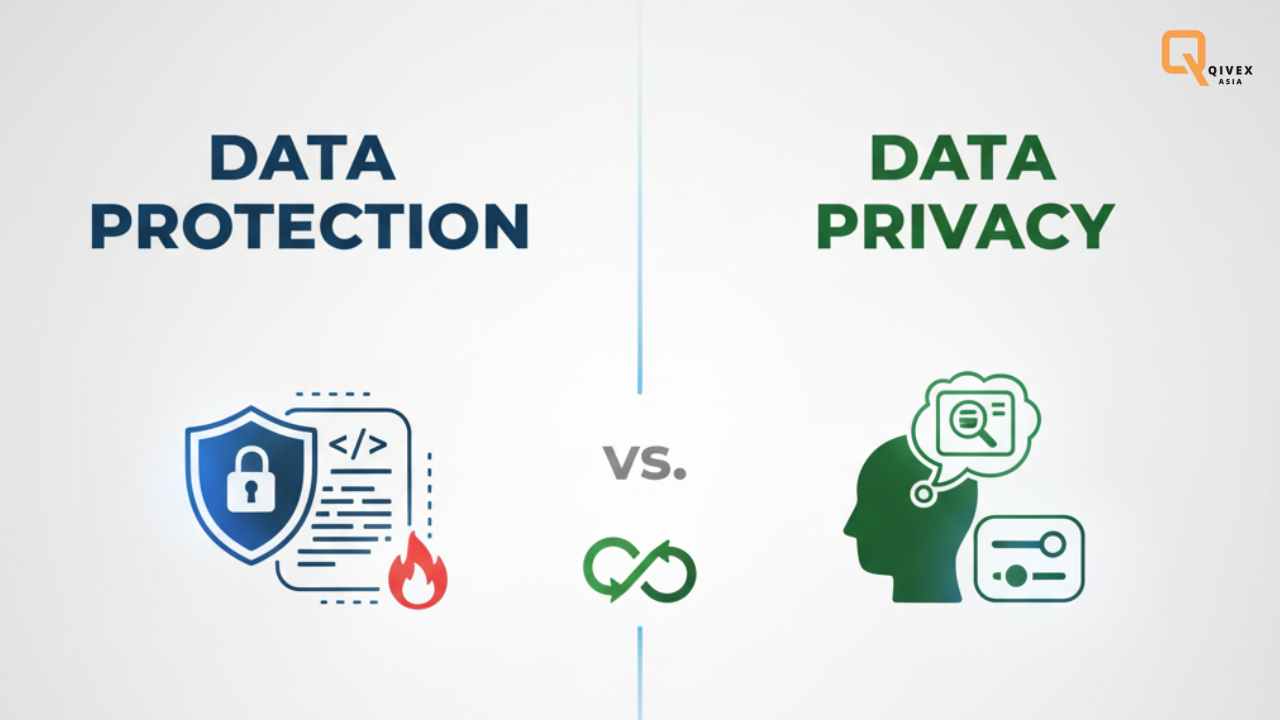
Privacy vs Security vs Governance
-
Privacy frames the rights and rules for personal data collection and use under laws such as GDPR, including transparency, purpose limitation, and rights requests.
-
Security delivers the technical and organizational measures—access controls, encryption, monitoring—that reduce the likelihood and impact of incidents.
-
Governance ties both to business goals through policies, roles, risk ownership, and oversight, so decisions are consistent and auditable.
Why It Matters Now

The average breach cost is 4.88 million USD, which many experts note is the kind of number that shifts security from “nice‑to‑have” to “must‑have” for executives and operators alike. DBIR shows 32% of breaches now include extortion, underscoring how data theft and pressure campaigns have become routine, not rare. In this view, data protection is less about perfection and more about shrinking the blast radius with clarity, guardrails, and rehearsal.
The Regulatory Basics
Regulations define the minimum expectations for lawful, fair, and transparent processing of personal data, with GDPR serving as the most influential global template. GDPR is technology‑neutral and applies to automated and manual processing, making its principles relevant across cloud, SaaS, and on‑prem stacks. Practically, organizations outside the EU that target or collect EU residents’ data are still within scope, which is why GDPR concepts show up in countless product and sales conversations.
GDPR in One Page
-
Lawful basis: processing requires a valid basis such as consent, contract, or legitimate interest, with clear disclosure and purpose limitation.
-
Individual rights: access, deletion, correction, portability, and objection require process maturity and data mapping to fulfill on time.
-
Breach notification: incidents that risk rights and freedoms must be reported to authorities within 72 hours, and to individuals where the risk is high.
Practical Compliance Moves
-
Map personal data flows to know systems, vendors, and storage locations, then align notices, contracts, and retention to those realities.
-
Align security controls to risk: encryption, access least‑privilege, logging, and vendor due diligence should match data sensitivity and exposure.
-
Prove it: keep records of processing, DPIAs where needed, and vendor assessments, because auditors and customers ask for evidence, not intentions.
Build the Foundation
The NIST Cybersecurity Framework 2.0 is a solid blueprint: Govern, Identify, Protect, Detect, Respond, and Recover. The new Governance function elevates accountability and supply‑chain risk, linking cybersecurity to enterprise risk so decisions stick beyond a single team or tool cycle. Many experts note that adopting CSF profiles and tiers helps teams prioritize work that actually reduces risk rather than chasing every alert.
CSF 2.0 in Action
-
Govern: set policy, roles, and risk appetite; include third‑party risk in oversight and contracts.
-
Identify: inventory data, assets, software, and vendors; classify data to match controls with sensitivity.
-
Protect: enforce MFA, least‑privilege access, encryption in transit and at rest, and secure configurations for cloud and SaaS.
-
Detect: centralize logs, tune detections for identity abuse and data exfiltration, and test alert paths regularly.
-
Respond and Recover: maintain playbooks, roles, and communications; test backups and restore times against real recovery objectives.
A Pragmatic Controls Checklist
-
Data classification: label personal and sensitive data so it gets stronger controls by default, not by exception.
-
Access hygiene: least‑privilege, time‑bound access, and fast revocation reduce the “keys to the kingdom” problem.
-
Encryption: enforce TLS for data in motion and strong encryption at rest, including keys stored in managed services or HSMs.
-
Backups: follow the 3‑2‑1 rule—three copies, two media types, one offsite—and test restores until they are boring.
Resilience and Response
Attackers now favor faster monetization via data theft and extortion, so resilience planning must assume exfiltration, not just encryption. Government and industry reporting show 2024 as a record or near‑record year in ransomware activity, with thousands of reported victims and notable spikes in Q4. Frankly, this smells like a continuing trend as affiliate ecosystems expand and exploit chains shorten, even as some payment flows dip.
Incident Realities
-
Extortion is common: 32% of breaches include some form of extortion, which changes how to plan communications and legal steps.
-
Third‑party exposure is rising: DBIR notes 15% of breaches involve partners or software supply chain issues, up 68% from the prior year’s count.
-
Human error persists: 68% of breaches involve non‑malicious human elements, which makes simple guardrails and coaching high‑ROI.
A Response Playbook That Works
-
Decide roles in advance: name incident commanders, legal, privacy, comms, and technical leads, and rehearse their handoffs.
-
Contain and verify: isolate affected identities and systems, validate scope with logs and forensic triage, and preserve evidence.
-
Restore with confidence: use clean, immutable, off-site backups and verify integrity before reconnecting systems to production.
-
Notify with clarity: meet regulatory timelines and explain steps taken to reduce harm, which sustains trust through the recovery.
Conclusion
Data protection works when governance, law, and engineering pull in the same direction and measure progress against real risks, not vendor slogans. Start with a shared blueprint like NIST CSF 2.0, anchor privacy requirements from GDPR, and harden the basics—access, encryption, monitoring, and 3‑2‑1 backups—so incidents become recoverable setbacks rather than existential crises. The forward edge is clear: teams that simplify, automate, and rehearse will spend less time firefighting and more time shipping value, even as threat volume rises and attackers pivot to pressure tactics.