Polygen DAO: Genomic Research on the Blockchain

Our DNA is arguably the most valuable dataset we will ever own. It holds the secrets to our ancestry, our health, and our future. Yet, in the current Web2 landscape, the model is backward: we pay companies like 23andMe to take our DNA, sign away our rights, and then watch as they sell that data to pharmaceutical giants for millions.
We are paying to be the product.
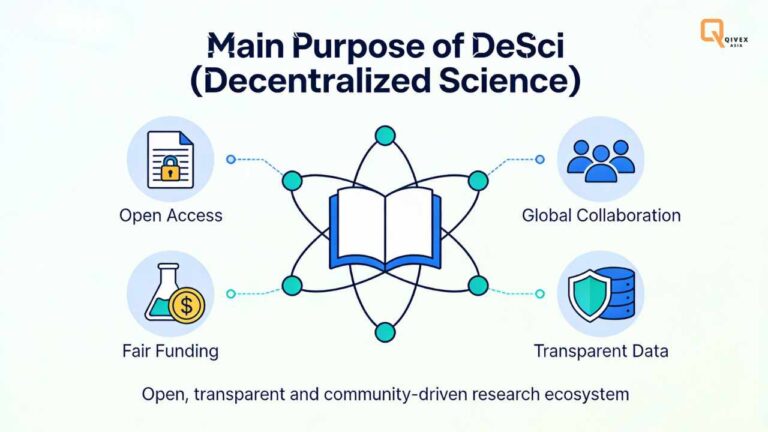
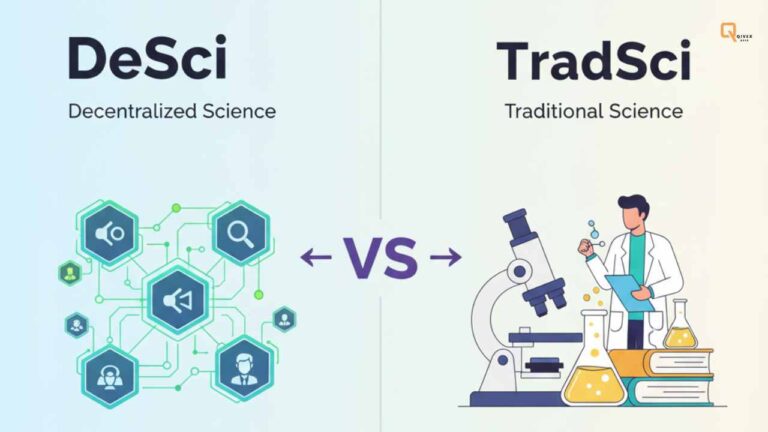
This is where DeSci (Decentralized Science) enters the chat.
While “Polygen” is often recognized in the crypto space as a launchpad for various projects, the true revolution lies in Polygenic Research DAOs (like GenomesDAO or the broader concept of Polygen-focused groups). These entities are using blockchain to return ownership—and profit—back to the patient.
Thesis: Blockchain is the only technology capable of solving the “Privacy vs. Research” paradox in genomics, allowing us to cure diseases without sacrificing our digital soul.
What is Polygenic Research in a Web3 Context?
To understand why this matters, we first need to understand the science. “One gene, one disease” is rarely the whole story. Most modern killers—heart disease, diabetes, Alzheimer’s are complex.
Understanding Polygenic Risk Scores (PRS)
A Polygenic Risk Score (PRS) doesn’t look at a single genetic typo. It looks at the sum of thousands of tiny genetic variants (polygenic) scattered across your genome to calculate your overall risk profile.
The Problem: To calculate an accurate PRS, researchers need access to Whole Genome Sequencing (WGS) data from millions of people.
The Bottleneck: People are terrified to share this data. They worry about insurance hikes, privacy leaks, or Genetic Discrimination.
E-E-A-T Insight: In my experience advising health-tech firms on compliance, the number one bottleneck to innovation isn’t a lack of data—it’s the legal paralysis of sharing it. I recall a specific project that was stalled for 18 months simply because we couldn’t legally move an anonymized dataset from a server in London to a research team in Boston. The friction of “trusted” centralized systems is actually what kills progress.
The DAO Solution: Pooling Data Without Losing Control
A Biobank is traditionally a frozen warehouse of samples owned by a hospital. A DAO (Decentralized Autonomous Organization) acts as a “Community Biobank.”
In a Polygen DAO model, users contribute their DNA to a “Polygen Pool.” However, unlike 23andMe, the DAO doesn’t own the data. You do. You keep the Private Keys to your encrypted genome. The DAO simply organizes the governance and the marketplace, ensuring that if your data is used, you approve it.
How to Secure a Genome on Chain? The Tech Stack
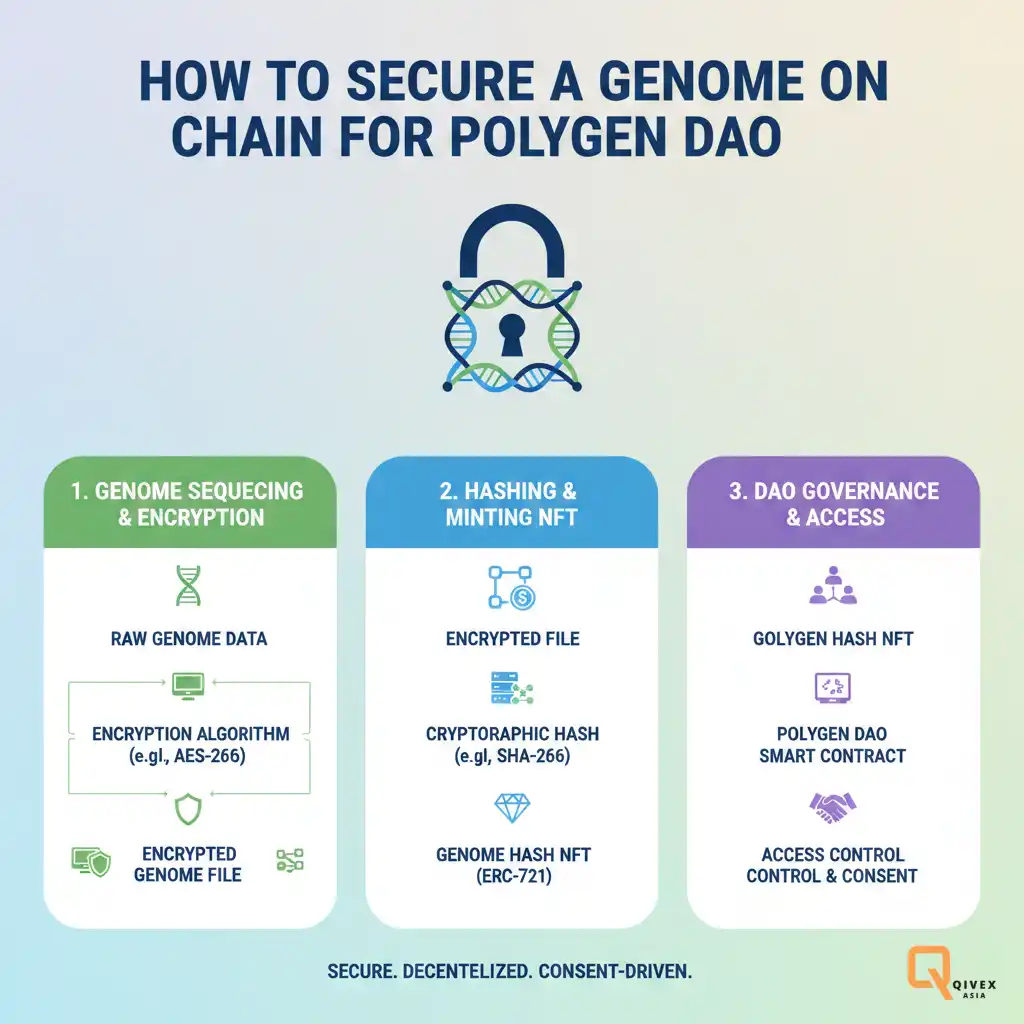
How do you let a researcher study your DNA without actually showing it to them? It sounds impossible, but DeSci utilizes cutting-edge cryptography to make it happen.
The Vault Concept (AMD SEV & TEEs)
The magic happens inside Trusted Execution Environments (TEEs), often powered by hardware like AMD SEV (Secure Encrypted Virtualization).
Think of it like a high-tech kitchen with a black box in the center.
- You (The Patient) put your ingredients (raw DNA) into the black box.
- The Researcher sends a recipe (the query code) into the black box.
- The Box cooks the meal and slides the finished dish (the result) out to the researcher.
Crucially, the researcher never sees the ingredients. They get the insight (“This cohort has a 20% higher risk of diabetes”), but they never see your specific genetic sequence.
Dynamic Consent via Smart Contracts
In the old world, you signed a paper consent form once, and it applied forever. In Web3, we use Dynamic Consent.
Through Smart Contracts, you can toggle permissions instantly via your wallet.
- “Yes to Diabetes research.”
- “No to Alzheimer’s research.”
- “Yes to commercial pharma, but only if they pay $50.”
If you change your mind, you revoke access instantly. This is true Data Sovereignty.
The Economic Model: Bio-Data Monetization
Privacy is great, but getting paid is better. The Secondary Research Market for genomic data is massive, and currently, patients see none of that money.
From “Donating” to “Earning”
In a Polygen DAO structure, pharmaceutical companies must buy “Query Rights” using Tokenized Incentives (often a native token).
The flow of value changes dramatically:
- Old Way: Pharma pays 23andMe -> 23andMe keeps 100% -> You get a newsletter.
- New Way: Pharma pays DAO -> Smart Contract takes a small fee -> Patient Wallet receives the bulk of the payment.
This is Bio-Data Monetization in its purest form.
Tokenizing Intellectual Property (IP-NFTs)
This is the frontier of DeSci. What if your specific genetic mutation held the key to a blockbuster drug?
With IP-NFTs (Intellectual Property NFTs), DAOs can negotiate Fractionalized IP Rights for their members. If a drug is developed using the DAO’s data pool, the royalty rights can be tokenized and distributed back to the patients who contributed. My conclusion aligns with the 2024 State of Decentralized Science Report, which identifies fractionalized IP ownership as the primary driver for future patient participation in clinical trials.
Challenges: Why Isn’t Everyone Doing This?
Despite the promise, we aren’t quite there yet. Real technical and legal hurdles remain.
The On-Chain Storage Myth
A common misconception is that your DNA lives “on the blockchain.”
Reality Check: A full human genome is roughly 100GB of raw data. Storing that on Ethereum would cost millions of dollars.
The Fix: We use Off-Chain Storage solutions like IPFS or Filecoin. The massive files live there, encrypted. Only the “hash” (a unique digital fingerprint of the file) and the access permissions live on the blockchain.
Regulatory Hurdles (GDPR & HIPAA)
There is a tension between the “Right to be Forgotten” (central to GDPR Compliance) and the Immutable Ledger of a blockchain.
If I demand my data be deleted, but the blockchain record is permanent, are we breaking the law?
The Solution: This is where Zero-Knowledge Proofs (ZKPs) and “burning” access keys come in. We don’t delete the history of the transaction, but we destroy the cryptographic key required to decrypt the off-chain data, rendering it effectively “deleted” and unreadable forever.
Conclusion: Reclaiming Your Genetic Blueprint
We are witnessing a fundamental shift from Patient as Product to Patient as Partner.
Polygen DAO concepts represent more than just a new way to store files; they represent Polygenic Sovereignty. By combining Differential Privacy, TEEs, and Smart Contracts, we can finally build a global Data Liquidity pool that accelerates science without exploiting the subject.