
Comprehensive Glossary of Data Protection and Privacy Terms Comprehensive Glossary of Data Protection and Privacy Terms

What is Glossary of Data Protection and Privacy Terms

Reader Disclosure

This content is created for educational and informational purposes only. It does not constitute financial, legal, or professional medical advice. While we strive for accuracy in the rapidly evolving fields of DeSci and AI, readers should conduct their own research before making decisions based on this information.

Why Understanding Privacy Language Has Become Necessary

Not long ago, most people rarely encountered legal or technical language about privacy. That situation has shifted. Individuals now sign into banking apps, medical portals, and social networks every day. Each of these platforms collects and stores personal information.

As digital services expanded, new laws and policies followed. Governments introduced regulations designed to protect personal data, control data processing, and strengthen information security. These rules brought with them a growing vocabulary that can confuse beginners.

Terms such as data controller, data subject, consent, or data breach appear frequently in privacy policies and technology documentation. Many readers encounter these expressions without fully understanding what they mean.

A glossary of data protection and privacy terms offers a simple solution. It gathers commonly used definitions and explains them in language that ordinary readers can follow.

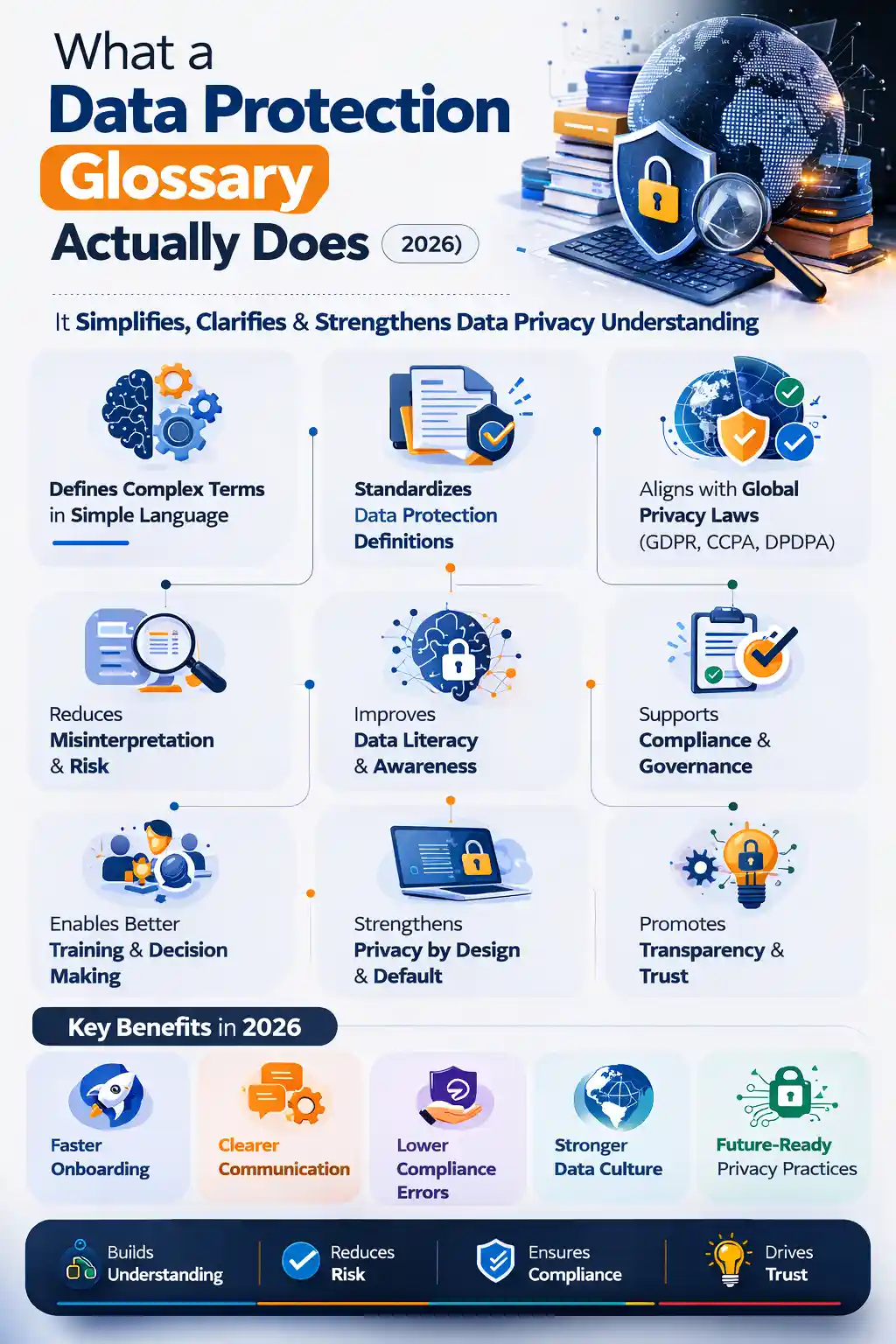
What a Data Protection Glossary Actually Does
What a Data Protection Glossary Actually Does

The Purpose of a Privacy Glossary

A glossary functions as a reference guide. Instead of reading lengthy legal explanations scattered across regulations, readers can consult short descriptions of key ideas in one place.

Privacy professionals, lawyers, software developers, and business managers often rely on these references when interpreting regulatory requirements.

For beginners, a glossary can act as an entry point into a complicated field.

Why Privacy Terminology Keeps Expanding

Technology rarely stands still. New digital tools generate new forms of data. Smart devices collect location patterns. Mobile applications record behavior and preferences. Online platforms analyze user activity to personalize services.

Each development introduces new questions about responsibility and protection.

Regulators and researchers create new terms to describe these practices. Over time, the vocabulary grows larger, making reference guides increasingly valuable.

Core Concepts in Data Protection

Comprehensive Glossary Of Data Protection And Privacy Terms Step-by-Step Guide

Personal Data

The phrase personal data refers to any information connected to an identifiable person. Names, phone numbers, addresses, and identification numbers often fall into this category.

Some information may identify individuals directly. Other data may reveal identity only when combined with additional details.

For example, a location pattern combined with workplace information might indirectly identify a person.

Data Subject

A data subject represents the individual whose information appears in a dataset. If a company stores customer records, each customer becomes a data subject within that system.

Privacy regulations often grant data subjects specific rights regarding their information.

These rights may include the ability to access stored records or request corrections.

Data Controller

A data controller refers to the organization responsible for deciding how and why personal data is processed.

For instance, a hospital managing patient records or a retail company storing customer purchase histories may act as data controllers.

Controllers determine the purpose behind collecting and using information.

Data Processor

A data processor works on behalf of a data controller. Instead of deciding how data should be used, processors carry out instructions provided by the controller.

Cloud service providers often act as processors because they store or manage data for other organizations.

This distinction helps regulators assign responsibility when problems occur.

Important Privacy Terms in Digital Systems

Important Privacy Terms in Digital Systems

Data Processing

The term data processing describes any operation performed on personal information. Activities such as collecting, storing, modifying, or sharing data fall within this category.

Processing can occur through automated systems or manual methods.

Understanding this term helps explain why organizations must handle information carefully throughout its lifecycle.

Data Breach

A data breach occurs when unauthorized individuals gain access to protected information. Breaches may result from cyberattacks, technical errors, or accidental disclosure.

The consequences often extend beyond financial loss. Individuals may face identity theft or exposure of private details.

Because of these risks, many regulations require organizations to report breaches quickly.

Encryption

Encryption converts readable information into coded text that unauthorized users cannot easily interpret.

Organizations often encrypt data during transmission across networks and while storing information in databases.

This technique reduces the likelihood that attackers can understand intercepted data.

Authentication

Authentication refers to the process of verifying a user’s identity before granting access to a system.

Passwords represent the most common example. Many services now include additional methods such as one-time verification codes or biometric scans.

Stronger authentication methods reduce the risk of unauthorized access.

Legal and Regulatory Privacy Terms

Legal and Regulatory Privacy Terms

Consent

Consent occurs when individuals agree to allow organizations to collect or use their personal information.

Privacy regulations usually require consent to be informed and voluntary. Users must understand what data is collected and why.

Companies cannot rely on hidden clauses buried inside complex documents.

Clear communication remains essential.

Right to Access

The right to access allows individuals to review the information organizations hold about them.

This right helps data subjects understand how companies use their personal data.

In many regulatory frameworks, individuals can request copies of their records or ask organizations to explain how those records are processed.

Right to Erasure

The right to erasure allows individuals to request the deletion of personal data under certain conditions.

For example, if a company no longer needs specific information or collected it without proper consent, the data subject may ask for removal.

This concept sometimes appears under the phrase “right to be forgotten.”

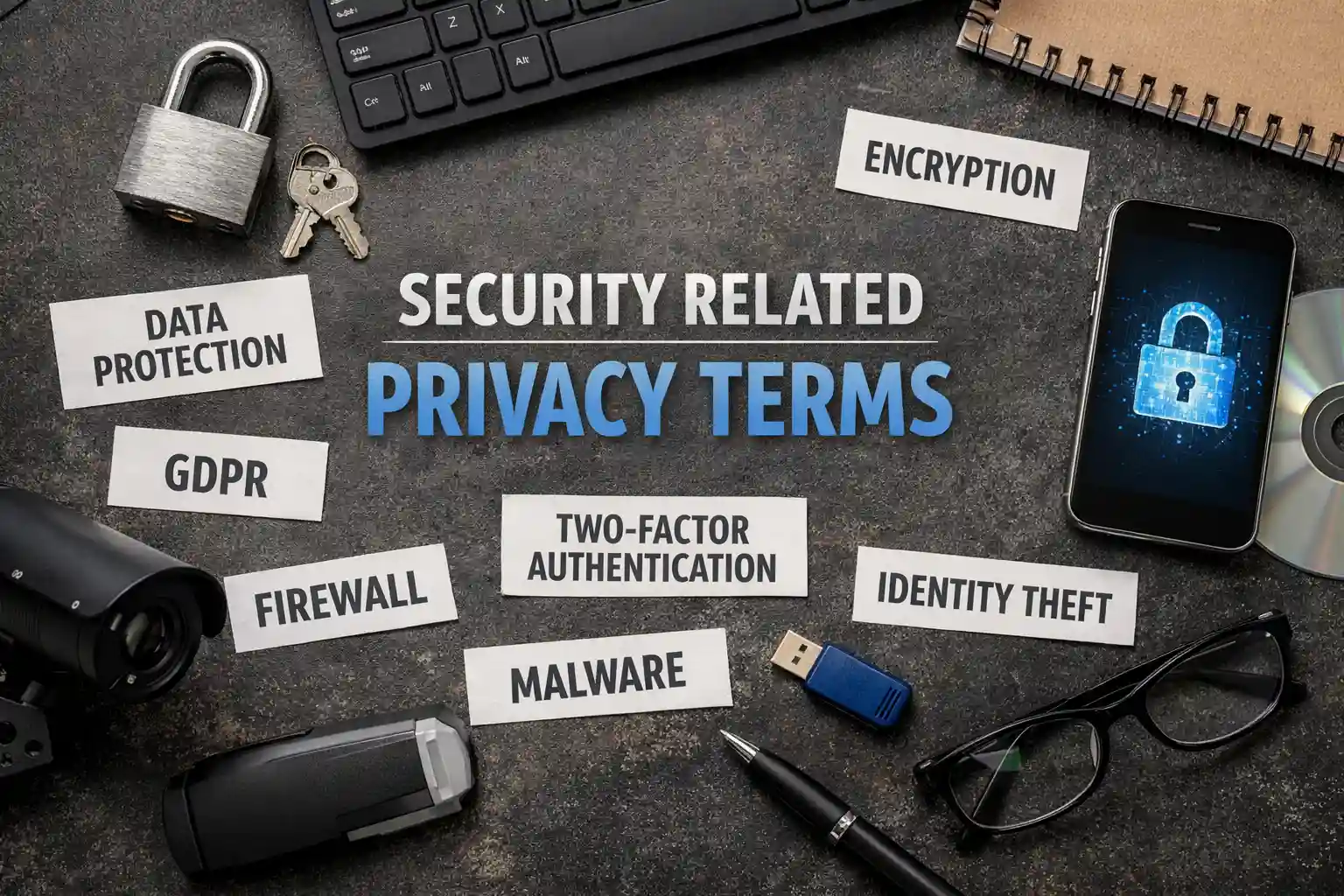
Security Related Privacy Terms

Security Related Privacy Terms

Data Minimization

Data minimization refers to limiting the amount of personal information organizations collect. Instead of gathering every possible detail, companies should request only the information necessary to perform a service.

Reducing collected data lowers potential exposure if security incidents occur.

Access Control

Access control describes systems that determine who can view or modify certain data.

Employees within organizations often receive access based on job responsibilities. A finance employee may view payment records while a customer service agent sees only order details.

Restricting access protects sensitive information from misuse.

Data Retention

Data retention policies define how long organizations store information before deleting it.

Keeping records indefinitely increases security risks. Retention policies encourage companies to remove data once its purpose expires.

These policies help maintain manageable and secure databases.

Why Businesses Use Privacy Glossaries

Organizations working with large datasets often rely on standardized definitions to avoid confusion. Employees across departments must understand the same terms when discussing privacy obligations.

Training programs frequently include glossaries that explain essential concepts.

Consistent language helps ensure that legal teams, software developers, and managers interpret regulations similarly.

Without shared definitions, compliance efforts become difficult.

Why Individuals Benefit From Understanding Privacy Terms

Consumers encounter privacy language regularly. Website policies, app permissions, and government guidelines all contain technical expressions.

A basic understanding of these terms helps individuals evaluate how organizations handle their data.

For example, recognizing the difference between a data controller and a data processor may clarify which organization holds responsibility for protecting personal information.

Knowledge empowers individuals to ask better questions about digital privacy.

The Future of Data Protection Vocabulary

Digital technology continues to expand. Artificial intelligence systems analyze large datasets. Smart devices record environmental information inside homes. Online services track behavioral patterns across multiple platforms.

Each development introduces new challenges for privacy regulation.

As a result, the vocabulary of data protection will likely continue evolving. New terms will emerge to describe new technologies, responsibilities, and safeguards.

Glossaries will remain valuable tools for keeping pace with these changes.

Author Recommendation

Writers addressing data protection terminology should aim for clarity rather than complexity. Legal documents often present definitions in dense language that can discourage readers from engaging with the material. Translating these definitions into straightforward explanations helps audiences grasp the ideas behind privacy regulations.

Context also strengthens understanding. Instead of presenting isolated terms, authors can connect each concept to everyday situations such as online banking, healthcare records, or social media use. These examples make privacy vocabulary more accessible for readers unfamiliar with regulatory language.

Accuracy matters equally. Terms such as personal data, data processing, and consent carry precise meanings in many legal frameworks. Writers should consult official regulatory sources when defining these expressions.

Finally, authors should remember that privacy terminology reflects real concerns about how personal information moves through digital systems. Articles that emphasize this human dimension often communicate the significance of data protection more effectively than purely technical descriptions.

Leave a Reply

Your email address will not be published. Required fields are marked *

This site uses Akismet to reduce spam. Learn how your comment data is processed.