



Reader Disclosure
This content is created for educational and informational purposes only. It does not constitute financial, legal, or professional medical advice. While we strive for accuracy in the rapidly evolving fields of DeSci and AI, readers should conduct their own research before making decisions based on this information.
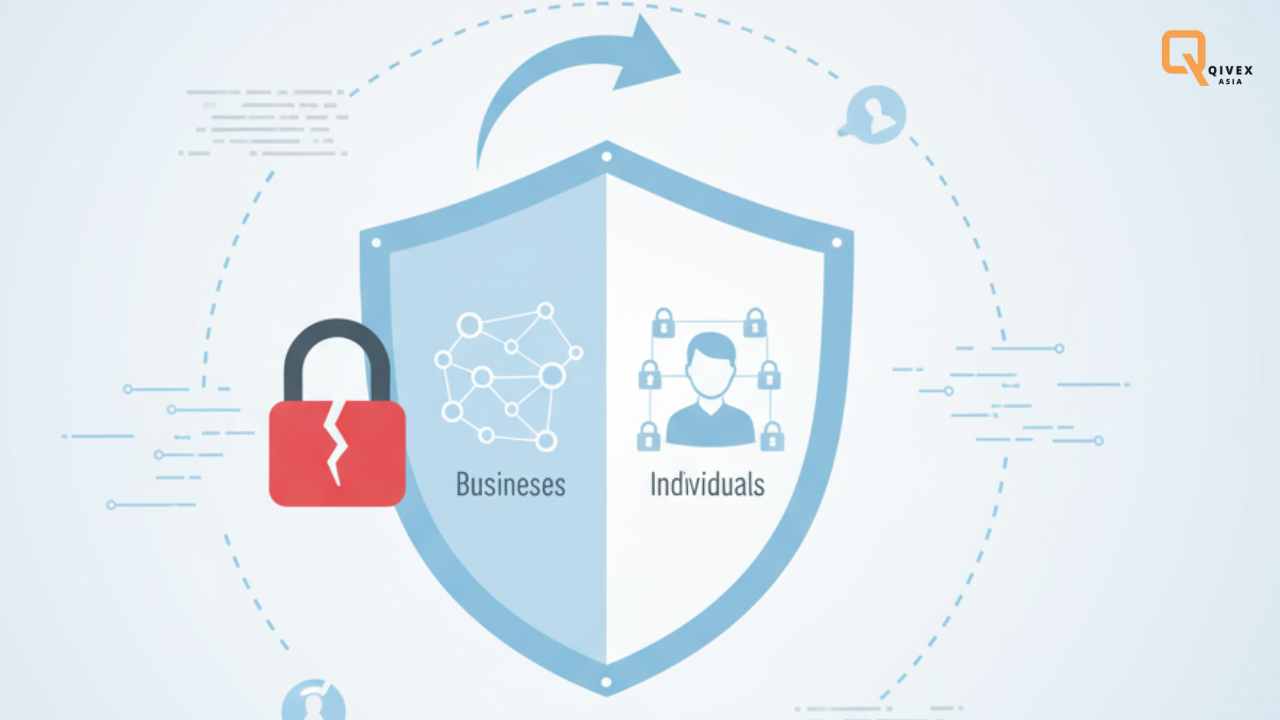
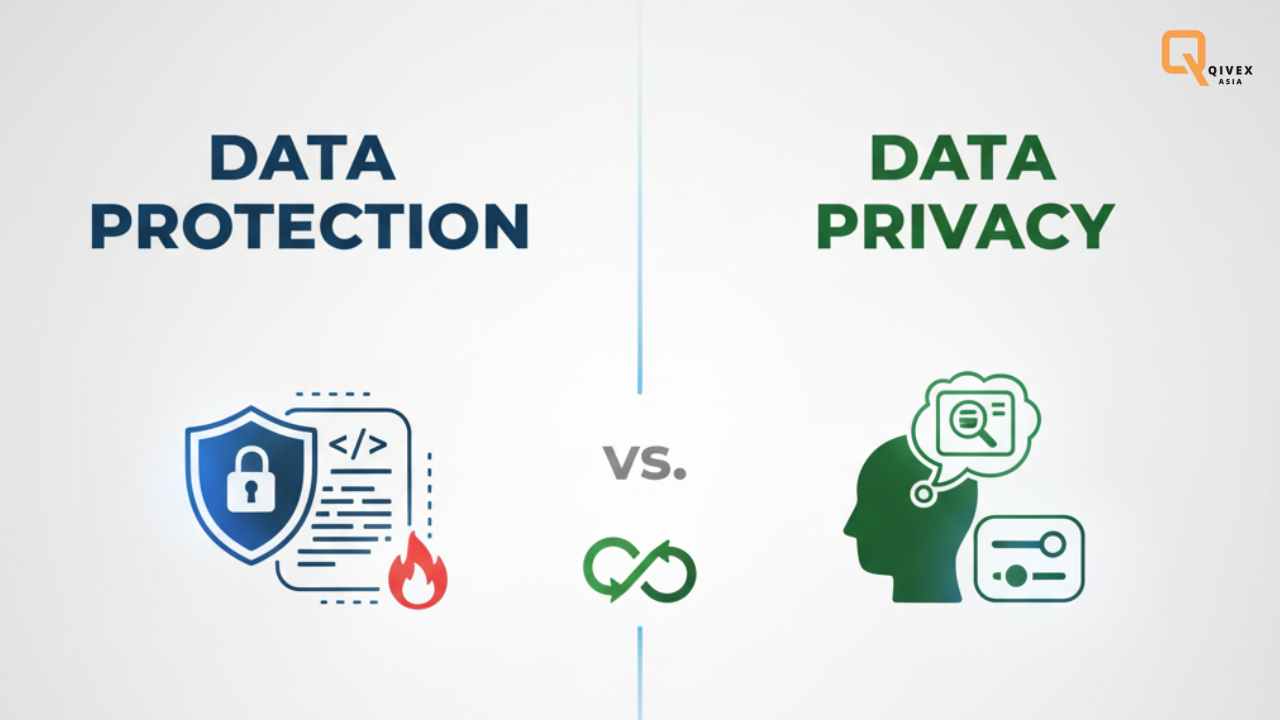
Data protection governs the obligations and controls that organizations implement to process personal data fairly and securely, while data privacy focuses on individuals’ rights and control over how personal data is collected, used, and shared. They overlap in daily operations, yet they serve different purposes that shape strategy, accountability, and investment decisions across modern digital programs.
Introduction
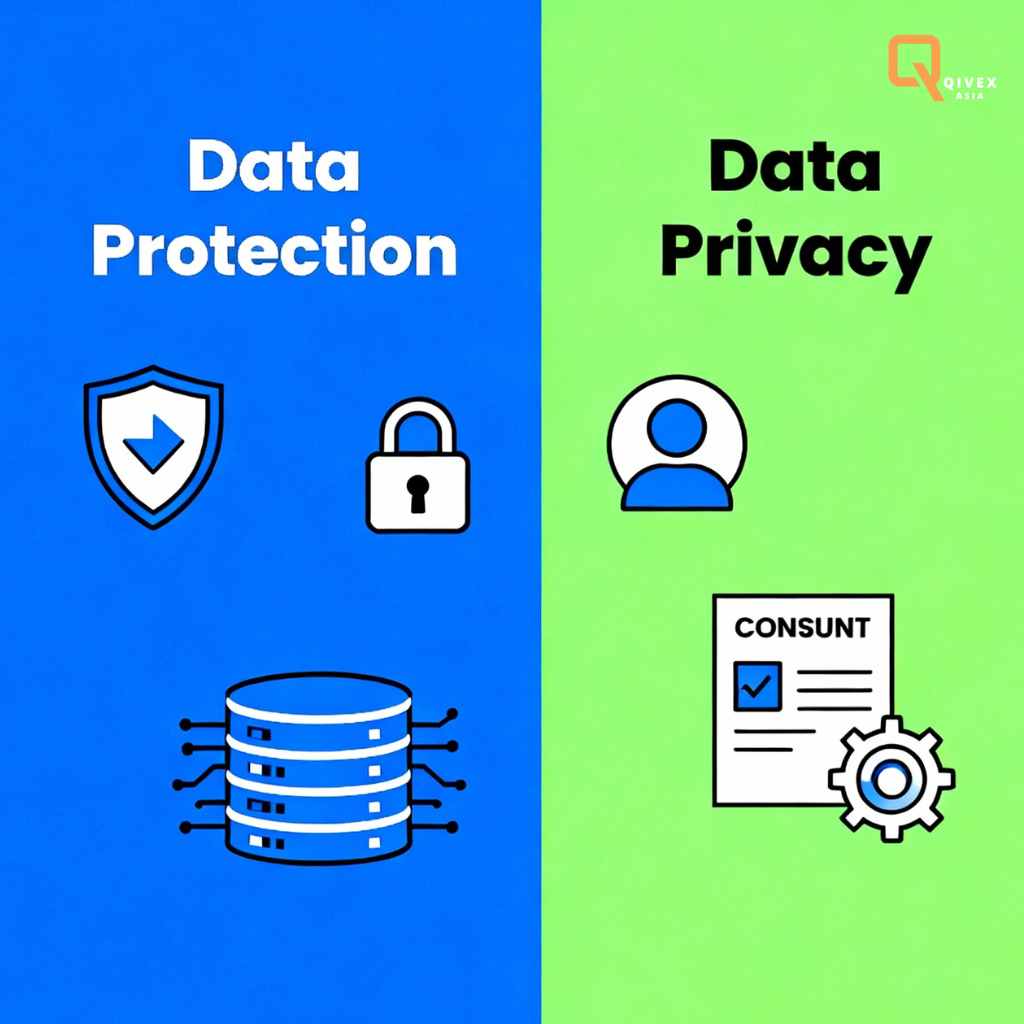
Most teams conflate data protection with data privacy, which leads to fuzzy policies, weak controls, and unclear accountability when something goes wrong. The distinction matters more than ever as privacy laws now cover roughly 82% of the global population across 144 countries, raising the bar for both governance and enforcement at scale.
Here is the thing: privacy is fundamentally about individual control and expectations, while data protection is about fair processing obligations and the safeguards organizations must apply across the data lifecycle. This article unpacks the core differences, where they intersect, how to operationalize both, and how to measure value so leadership sees outcomes beyond compliance checklists.
Pillar 1: Definitions and Legal Foundations
What “Privacy” Really Covers
In European doctrine, privacy and data protection are recognized as distinct fundamental rights, with privacy centering on respect for private life and communications, and data protection covering the full spectrum of processing impacts on individuals.
In practical terms, privacy is driven by individual control over data use, notice, choice, and transparency about how data is handled, particularly around purpose and sharing. Industry data suggests that privacy has moved from a compliance chore to a customer requirement, with 94% of organizations saying customers will not buy if data is not properly protected, which reflects privacy expectations embedded in purchasing behavior.
What “Data Protection” Requires
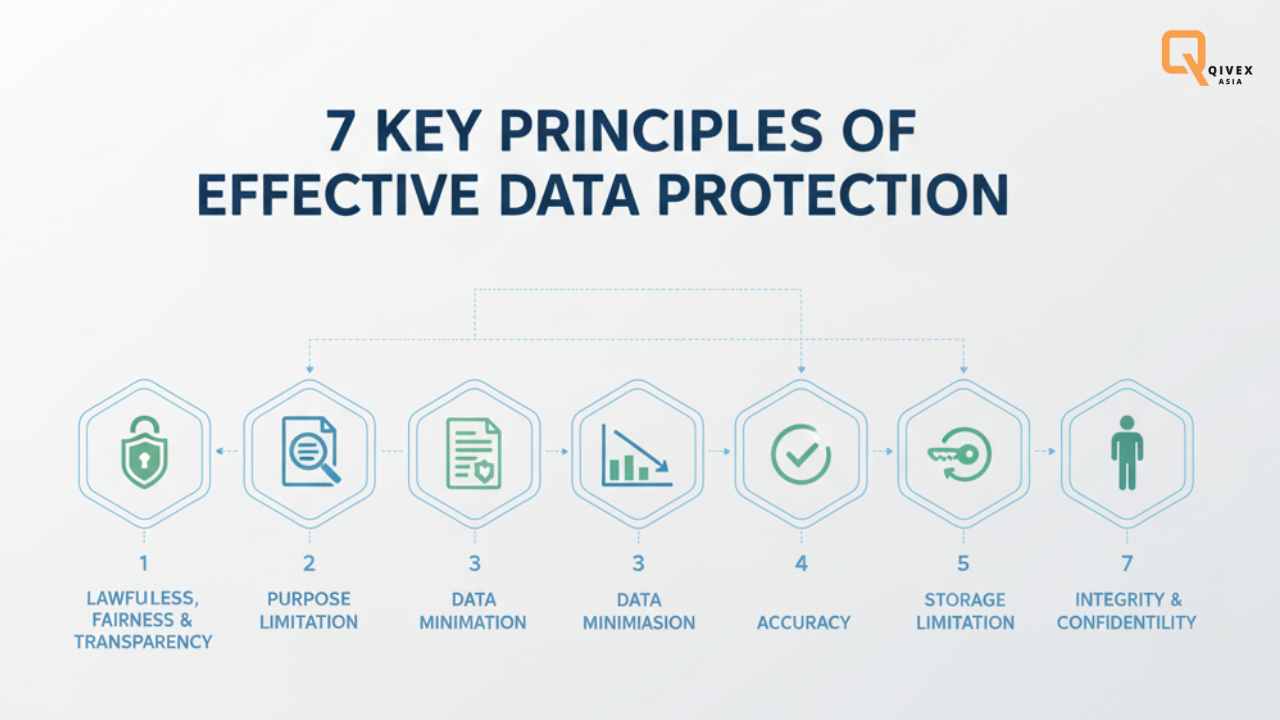
Data protection is driven by fair processing duties such as lawfulness, purpose limitation, data minimization, integrity, and accountability, which organizations must evidence through policies and controls. This duty of fair processing gets translated into systematic practices like data inventories, DPIAs, access controls, retention rules, and incident response that demonstrate responsible stewardship.
Globally, the legal environment is expanding and maturing, with 144 countries now having enacted national privacy laws that demand demonstrable safeguards, reporting, and enforcement readiness.
Pillar 2: Security, Privacy, and the Breach Reality
Why Security Is Necessary but Not Sufficient
Security controls protect confidentiality, integrity, and availability, yet privacy obligations still apply even when security is strong, since lawful basis, purpose limits, and data rights must be honored regardless of technical defenses. Frankly, conventional wisdom that equates “secure” with “compliant” is wrong, because many privacy failures stem from misuse, overcollection, or opaque processing rather than perimeter gaps alone.
Many experts note that boards increasingly ask for proof of privacy program performance in addition to security posture, which aligns with rising expectations for transparency and measurable trust.
The Cost of Getting It Wrong
The global average cost of a data breach hit 4.88 million dollars in 2024, up 10% year over year, with 70% of breached organizations reporting significant disruption to operations and customers. Breaches that span multiple environments, including public cloud, private cloud, and on-premises, averaged above 5 million dollars and took the longest to identify and contain at 283 days, which compounds reputational and regulatory risk. Security AI and automation were associated with 2.2 million dollars lower breach costs and 98 days faster containment when used extensively, which highlights the operational value of intelligent controls tied to data protection goals.
Pillar 3: Operationalizing the Difference
Build the Privacy Program
-
Maintain a data inventory and mapping that link systems to purposes, legal bases, processors, and retention, since traceability underpins every control and disclosure.
-
Run DPIAs for high-risk processing to surface harms, mitigations, and documented decisions that regulators expect and boards value.
-
Report program metrics to leadership, such as audit results, data breaches, subject requests, DPIAs completed, and incident response performance, as 98% of organizations now present privacy metrics to the board.
Engineer the Protection Stack
-
Enforce purpose limitation and minimization through input validation, field-level access controls, and data retention jobs that actually delete or archive on schedule.
-
Apply identity and access management, encryption, key management, tokenization, and data loss prevention aligned to system criticality and data classification tiers.
-
Exercise incident response through tabletop tests that include both security and privacy roles so notification clocks, evidence collection, and regulator engagement are ready on day one.
Align on AI and Data Use
-
Explain how AI applications work, ensure a human stays in the loop for meaningful decisions, and institute an AI ethics program, which are the top steps organizations report taking to maintain trust.
-
Set guardrails on inputs to GenAI, since many teams already paste nonpublic process data and employee details into prompts, creating leakage and confidentiality risks.
-
Recognize the gap between organizational priorities and customer expectations, and increase transparency about data use to close the trust delta in AI scenarios.
Pillar 4: Proving Value to Leadership
The Business Case That Lands
Privacy investment delivers attractive economics, with 95% of organizations saying benefits exceed costs and an average 1.6 times return on investment across programs. Trust outcomes are rising, with 80% reporting significant loyalty and trust benefits from privacy spending, which correlates with stronger brand preference and lower friction in sales cycles.
Breach avoidance and resilience are tangible, as better staffed and automated programs reduce breach costs, shorten lifecycles, and avoid the most disruptive multi-environment incidents.
A Simple Scorecard Framework
-
Trust and growth: Track sales delays, deal wins linked to certifications like ISO 27701, and NPS movements after privacy changes, since 98% consider external certifications important in buying decisions.
-
Risk and resilience: Track time to detect, time to contain, DPIAs completed, data subject request SLAs, and tabletop frequency to align with both regulatory and operational expectations.
-
Cost and ROI: Track program spend versus estimated benefits, including reduced breach losses and efficiency gains, then benchmark against the 1.6 times ROI median to communicate value in plain terms.
Conclusion
Data privacy is the promise to individuals about how their data will be used, while data protection is the evidence that an organization processes data fairly, securely, and accountably across its lifecycle. Treating them as interchangeable blurs duties, weakens controls, and confuses boards, whereas separating them clarifies roles, metrics, and investments that build trust and reduce breach exposure.
The next move is simple and powerful: map data, institutionalize DPIAs, put metrics in front of leadership, and harden protections where breach math is worst, especially across multi-environment estates and high-risk processes. Looking ahead, the organizations that win will treat privacy as a trust and growth engine and protection as the operational backbone that proves it, which aligns with global legal momentum and rising buyer expectations.