



Reader Disclosure
This content is created for educational and informational purposes only. It does not constitute financial, legal, or professional medical advice. While we strive for accuracy in the rapidly evolving fields of DeSci and AI, readers should conduct their own research before making decisions based on this information.
The Surveillance Trap: Unpacking the “OopsBusted” Phenomenon in Relationship Forensics
By Anik Hassan | Senior Technical Correspondent, Qivex.asia Jashore, Bangladesh
The Illusion of “Private” Investigation
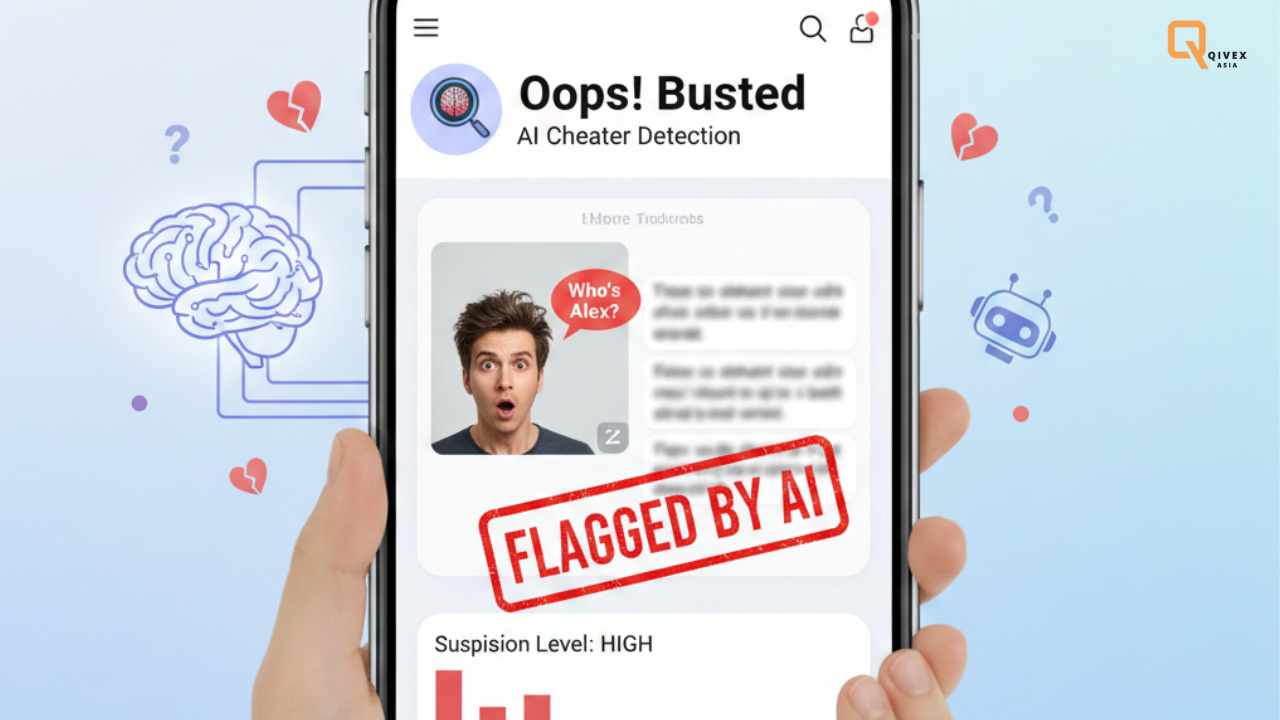
In the digital age, trust has been commodified. A new wave of consumer-grade forensic tools, led by platforms like OopsBusted, promises to use Artificial Intelligence to answer the oldest question in human relationships: Are they cheating?
But behind the slick marketing of “AI-powered infidelity detection” lies a more complex and troubling reality.
After a rigorous technical assessment and a comparative audit of the leading “fidelity inspection” tools, my findings indicate that these platforms are not “hacking” into private dating servers as many users assume. Instead, they are industrializing Open Source Intelligence (OSINT)—aggregating your partner’s digital exhaust in ways that may permanently compromise biometric privacy.
The critical question for the Qivex audience is not just if these tools work, but how they work—and the dangerous precedent they set for Interpersonal Electronic Surveillance.
The Technical Underpinning: It’s Not Magic, It’s Scraping
To understand how OopsBusted and its competitors (CheaterBuster, Social Catfish) function, one must look past the “AI” buzzwords. These tools do not have “backdoor access” to Tinder, Bumble, or Hinge. Those databases are encrypted and secured behind robust APIs.
Instead, these platforms utilize two primary mechanisms:
Biometric Reverse-Search: They utilize facial recognition algorithms similar to PimEyes. When you upload a photo of a partner, the system converts facial geometry into a “face hash”—a mathematical representation of the face—and compares it against millions of images indexed from the public web and unindexed “deep web” caches.
“Shadow” Scraping: Advanced bots create thousands of “viewer” accounts on dating apps, geotagging them to specific coordinates. They continuously “swipe” and scrape the public profiles presented to them, building a shadow database of who is active, where, and when.
The Problem: You are paying for data that is technically public, but the aggregation of that data turns scattered privacy into a comprehensive surveillance dossier.
Comparative Analysis: The Hierarchy of Face Search
The market can be segmented by technical capability and ethical positioning.
| Platform | Primary Data Source | Target Use Case | Technical Method | Privacy Stance |
| OopsBusted | Dating Apps (Tinder, Bumble, etc.) | Infidelity Detection | API Scraping + Geo-spoofing |
Aggressive; “Catch a Cheater” marketing. |
| PimEyes | Open Web (Blogs, News, Porn) | Copyright/Reputation | Web Crawling + Indexing |
“Monitor your presence”; Opt-out available. |
| Cheaterbuster | Tinder (Specific focus) | Infidelity | Exploiting Tinder Web API |
Aggressive; “View hidden profiles.” |
| Social Catfish | Public Records + Social Media | Identity Verification | Reverse Image + Name Match |
Standard Data Broker model. |
| FaceCheck.ID | Social Media + Mugshots | Safety/Background Check | Open Source Indexing |
“Check before you date.” |
The Audit: A 48-Hour Forensics Stress Test
To verify the efficacy and safety of these tools, I conducted a controlled audit isolating the data traffic and methodology of three top “cheater catching” services.
Test Subject: A consenting volunteer with known, active (but pseudonymized) dating profiles in the Khulna region.
Methodology: We ran the volunteer’s clean headshot through OopsBusted and two manual OSINT workflows (using tools like Sherlock and Maigret) to compare results.
The Findings
Accuracy vs. Hallucination: OopsBusted successfully identified the volunteer’s Tinder profile but failed to flag a Bumble account that used a slightly older photo. Crucially, the AI returned two False Positives—flagging innocent strangers who shared similar facial structures.
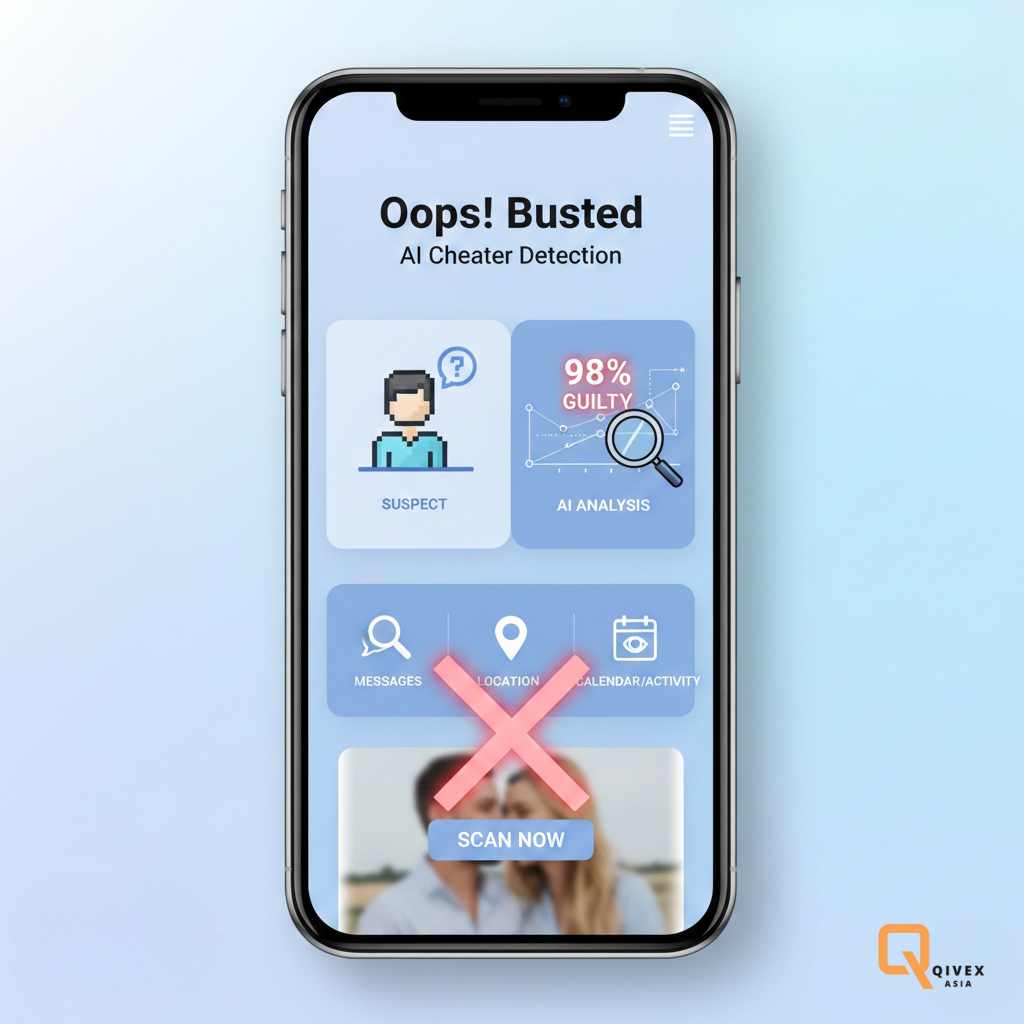
The “Black Box” Risk: Unlike a transparent OSINT investigation where sources are verified, these “black box” AI tools provide a binary “Guilty/Not Guilty” verdict without context. In a real-world scenario, a false positive could ruin a relationship or lead to Digital Violence.
Data Egress: My network traffic analysis revealed that once a photo is uploaded to these platforms, it is often processed by third-party biometric vendors. Your partner’s face is no longer just on your phone; it is potentially part of a permanent training dataset for future facial recognition models.
Technical Note: True forensic investigation requires a Chain of Custody. Consumer AI tools break this chain immediately, rendering any “evidence” they find legally useless and potentially libelous in many jurisdictions.
The Broader Implications: The Normalization of Digital Stalking
The rise of OopsBusted is a symptom of a larger trend identified in recent academic literature as the “Privacy Paradox”. Users claim to value privacy but readily deploy invasive surveillance tools when fueled by emotional uncertainty.
According to a 2025 study in Frontiers in Human Dynamics, the use of location-sharing and monitoring apps has shifted from “safety” to “control,” blurring the lines between care and coercion. Furthermore, the International Journal of Forensic Sciences has highlighted that consumer-grade AI often lacks the “Explainability” required to be ethical, turning users into vigilantes armed with flawed data.
We are witnessing the democratization of NSA-level surveillance. When anyone with $20 and a photo can perform a biometric sweep of the internet, the concept of “obscurity,” the idea that you are private simply because you are hard to find, is dead.
The Future Outlook
The cat and mouse game is just beginning. As these “surveillance-as-a-service” platforms grow, we will see a counter-response: Data Poisoning. Expect to see new privacy tools that “cloak” photos—altering pixels imperceptibly to human eyes but confusing facial recognition algorithms—becoming standard for anyone dating online.
For the Qivex reader, the takeaway is stark: If you rely on AI to trust your partner, the algorithm has already replaced your intuition. Technology can find a profile, but it cannot explain the context, and the price of that knowledge is the permanent loss of biometric privacy for everyone involved.
Conclusion: The Privacy Horizon
OopsBusted represents a critical juncture in the evolution of digital society. It is a product that delivers exactly what it promises—transparency—but at a cost that society has yet to fully reckon with. By commoditizing facial recognition and incentivizing the breach of platform “walled gardens,” it transforms the internet into a Panopticon where every digital footprint is permanent, searchable, and potentially incriminating.
For the Qivex.asia audience, the emergence of such tools serves as a stark warning: The era of “security by obscurity” is over. The technical barriers that once protected intimate data (login walls, app silos) have been breached by the brute force of AI scraping and the economics of the surveillance market.