



Reader Disclosure
This content is created for educational and informational purposes only. It does not constitute financial, legal, or professional medical advice. While we strive for accuracy in the rapidly evolving fields of DeSci and AI, readers should conduct their own research before making decisions based on this information.
Why Certain Personal Information Requires Extra Care
Information moves quietly through modern life. A hospital records patient details. A bank processes transactions. A mobile app stores location history. Most of these interactions happen without much thought from the person behind the data.
Still, not all personal information carries the same level of risk. Some details reveal deeply private aspects of a person’s life. Health conditions, biometric identifiers, financial records, and religious beliefs can expose individuals to discrimination, identity theft, or other forms of harm if misused.
Because of that risk, privacy laws and data governance policies treat sensitive personal data with special attention. Organizations handling such information must follow stricter protection measures than those applied to ordinary personal data.
Understanding what qualifies as sensitive personal data and why it requires stronger safeguards helps individuals and organizations navigate the growing digital environment.
Defining Sensitive Personal Data
The Meaning of Sensitive Personal Data
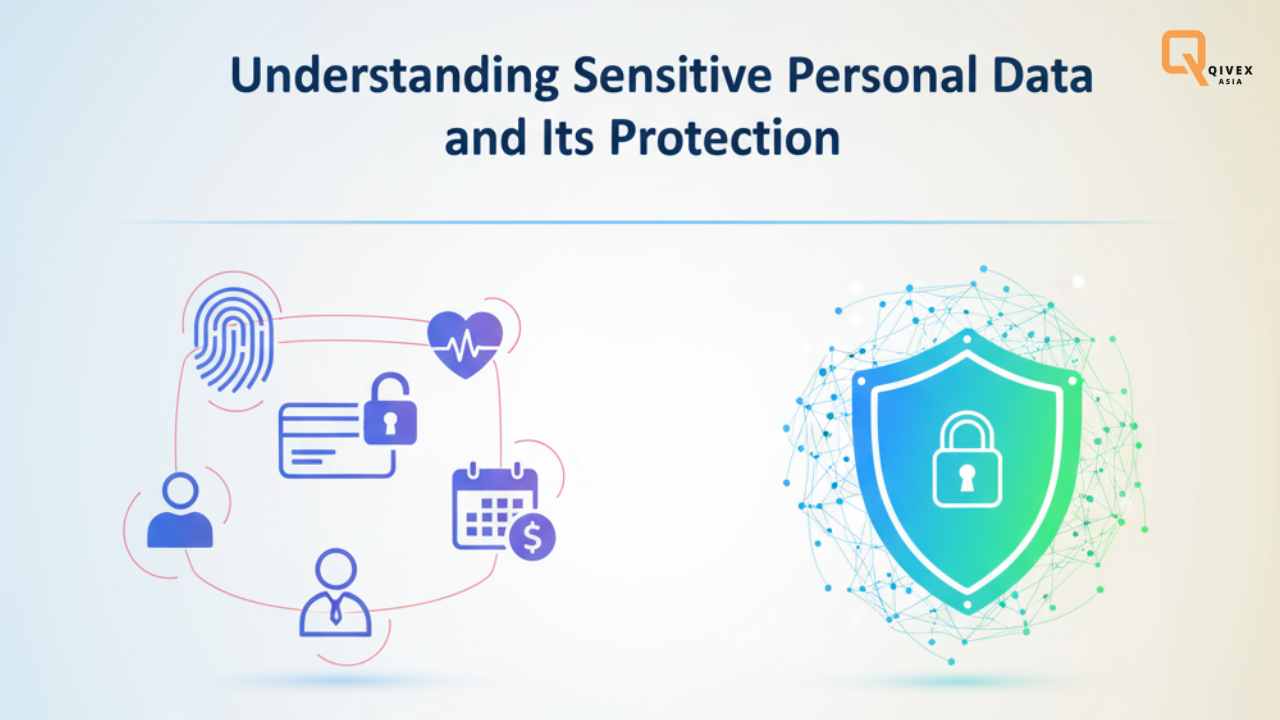
The term sensitive personal data refers to categories of personal information that carry a higher potential for harm if exposed or misused. These data elements often reveal intimate aspects of a person’s identity, health, or beliefs.
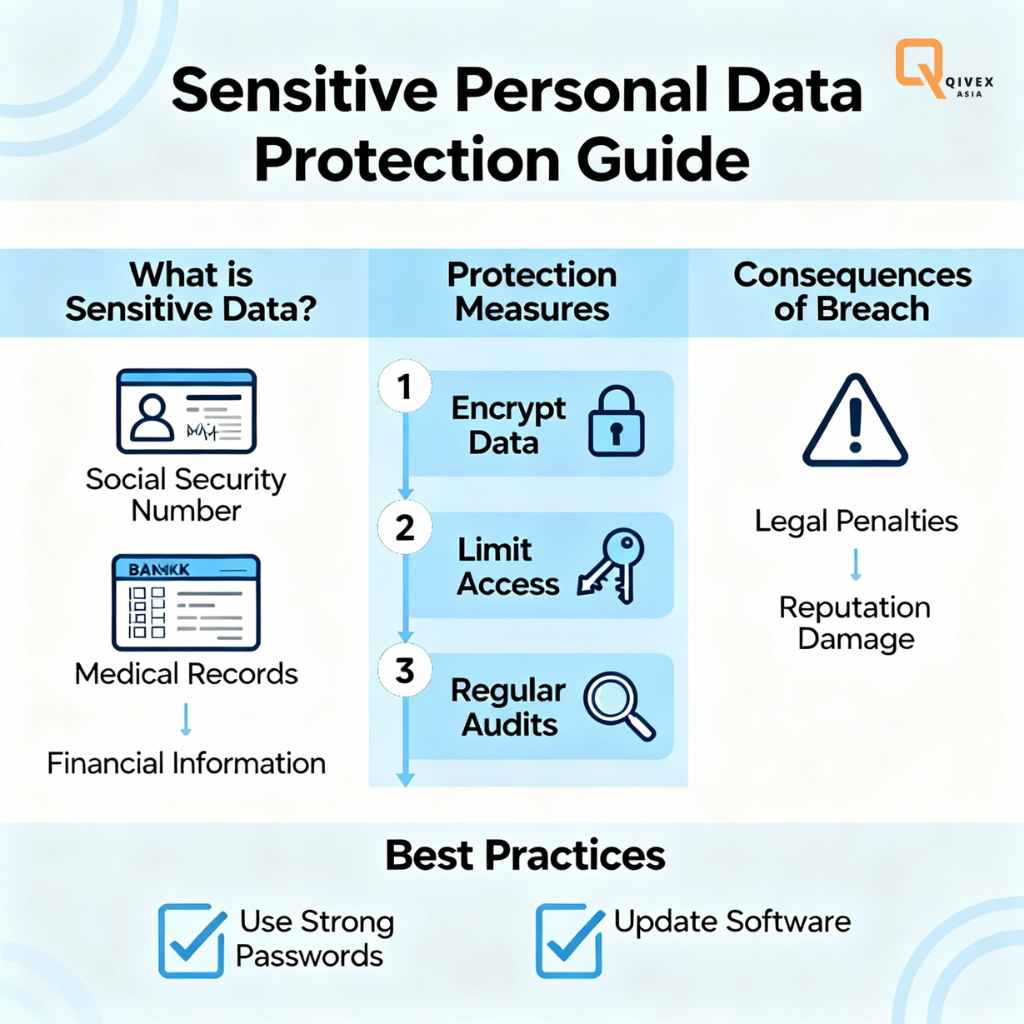
Many privacy regulations identify certain data categories as sensitive because misuse could lead to discrimination, social stigma, or financial damage. These categories frequently include health information, biometric data, financial records, and details about racial or ethnic origin.
Legal definitions vary across jurisdictions, yet the core principle remains consistent. Information that could seriously affect a person’s safety, dignity, or rights deserves stronger protection.
Sensitive Data Within Modern Privacy Regulations
Several global privacy laws define and regulate sensitive personal data. One of the most widely discussed frameworks is the General Data Protection Regulation, often called GDPR.
Under this regulation, specific data categories receive enhanced protection. These include genetic data, biometric identifiers, health records, and information revealing political opinions or religious beliefs.
Organizations handling such data must meet stricter legal requirements before collecting, storing, or processing it.
Categories of Sensitive Personal Data

Health and Medical Information
Few data types reveal as much about a person’s private life as medical records. Health data may include diagnostic results, treatment history, prescription information, and medical imaging.
Hospitals and healthcare providers store these records in electronic health systems to support patient care. While digital records improve accessibility and coordination between providers, they also introduce privacy concerns.
Unauthorized disclosure of medical information could expose individuals to discrimination in employment, insurance coverage, or social relationships.
For this reason, healthcare systems typically operate under strict data protection regulations.
Biometric Identifiers
Biometric identifiers represent physical traits unique to each individual. These identifiers include fingerprints, facial recognition templates, iris scans, and voice patterns.
Unlike passwords or access codes, biometric characteristics cannot be easily changed once compromised. If a biometric database were breached, affected individuals would face long-term risks.
Organizations increasingly use biometric authentication in mobile devices, airports, and workplace access systems. As these technologies expand, protecting biometric data becomes an urgent priority.
Financial and Payment Information
Financial data reveals spending habits, income patterns, and banking relationships. Bank account numbers, credit card details, and transaction histories allow financial institutions to process payments and detect fraud.
Criminal networks often target financial records because they provide direct access to monetary resources.
Banks and payment processors invest heavily in encryption systems and fraud monitoring tools to guard these records. Even small security failures can produce widespread financial consequences.
Government Identification Numbers
Government-issued identification numbers connect individuals to official records and services. Examples include passport numbers, national identification numbers, and driver’s license numbers.
These identifiers allow authorities to confirm identity during legal and administrative processes.
If such numbers fall into the wrong hands, attackers may impersonate individuals to open financial accounts or obtain services fraudulently.
Because of this risk, organizations handling official identification data often apply strict access controls.
Personal Beliefs and Identity Characteristics
Certain data categories relate directly to personal identity and belief systems. Information revealing religious affiliation, political views, racial origin, or sexual orientation may expose individuals to discrimination in some social contexts.
Privacy laws in many regions recognize this sensitivity. They impose restrictions on collecting or processing such information unless a clear legal justification exists.
Protecting these details helps preserve personal dignity and freedom of expression.
Why Sensitive Personal Data Requires Stronger Protection

The Risk of Identity Theft
Identity theft remains one of the most common consequences of data exposure. Criminal groups use stolen personal data to impersonate individuals in financial transactions or online services.
Sensitive personal data often provides the key elements needed for these attacks.
For example, combining a government identification number with financial details may allow attackers to open fraudulent accounts or request loans under another person’s name.
Preventing unauthorized access to sensitive information helps reduce these risks.
Discrimination and Social Harm
Sensitive personal data may reveal characteristics that influence how others treat an individual. Medical conditions, religious beliefs, or political affiliations may lead to unfair treatment in employment, housing, or social environments.
Privacy protections attempt to prevent these outcomes by limiting how organizations collect and share sensitive information.
Maintaining confidentiality allows individuals to control when and how such personal aspects of their lives become known.
Long-Term Consequences of Data Exposure
Some types of data exposure create consequences that last for years.
Biometric data, for example, cannot be reset like a password. Once exposed, the same fingerprint or facial structure continues to identify the individual indefinitely.
Medical information can also remain relevant throughout a person’s lifetime.
Because of these long term implications, organizations must treat sensitive personal data with particular caution.
Legal Frameworks Governing Sensitive Personal Data

Regulatory Standards Around the World
Many countries introduced privacy laws that specifically address sensitive personal data. These regulations define categories of protected information and establish requirements for organizations handling such data.
Companies often must obtain explicit consent before collecting sensitive data. They must also demonstrate that the collection serves a legitimate purpose.
Regulatory authorities may impose penalties when organizations fail to comply with these obligations.
Individual Rights Over Personal Information
Privacy regulations frequently grant individuals rights regarding their personal data. These rights may include access to stored records, correction of inaccurate information, and requests for deletion under certain conditions.
When sensitive personal data appears in organizational databases, these rights become particularly important.
Individuals gain the ability to review how organizations use information about their health, identity, or financial status.
Data Protection Practices for Sensitive Information
Encryption and Secure Storage
Encryption converts readable data into coded information that only authorized systems can interpret. Many organizations encrypt sensitive personal data during transmission and while stored in databases.
Even if attackers intercept encrypted data, they cannot easily understand the information without the correct decryption key.
Secure storage environments often include additional layers of protection, such as network isolation and intrusion monitoring.
Access Control Policies
Organizations frequently restrict access to sensitive personal data based on job responsibilities. Employees receive access only to the information required for their tasks.
Healthcare providers illustrate this approach well. A physician may view patient medical records, while administrative staff may see only scheduling information.
Limiting access reduces the risk of accidental or intentional misuse.
Data Minimization
Another common protection practice involves collecting only the information necessary for a specific purpose.
If a service requires only an email address to function, requesting additional personal details could increase risk without a clear benefit.
Reducing unnecessary data collection lowers the potential impact of future security incidents.
The Role of Technology in Protecting Sensitive Data

Advances in Cybersecurity Tools
Organizations increasingly rely on cybersecurity technologies to defend sensitive information. These tools monitor network activity, detect suspicious behavior, and block unauthorized access attempts.
Machine learning based security systems can analyze large volumes of network traffic to identify anomalies that may indicate potential attacks.
While technology alone cannot eliminate risk, it strengthens the overall defense against data breaches.
Privacy Enhancing Technologies
Researchers continue exploring privacy-enhancing techniques that allow organizations to analyze data without exposing individual identities.
Techniques such as data anonymization and secure computation methods attempt to reduce the amount of identifiable information within datasets.
These approaches aim to balance useful data analysis with the need for strong privacy protections.
The Future of Sensitive Data Protection
The amount of personal information generated by digital systems continues to grow. Wearable devices record health indicators. Smart home systems monitor environmental conditions. Online services track user activity across multiple platforms.
Each new technology creates additional streams of data that organizations must manage responsibly.
Future data protection efforts will likely focus on improving security technologies, strengthening regulatory frameworks, and increasing public awareness about privacy rights.
Sensitive personal data will remain at the center of these discussions.
Author Recommendation
Writers addressing sensitive personal data should approach the topic with care and clarity. Privacy discussions often become dominated by legal terminology and technical descriptions, which may distance readers from the real human implications of data protection.
A more effective approach begins with everyday examples. Readers connect more easily with the topic when they understand how health records, financial accounts, or biometric identifiers appear in ordinary digital interactions.
Accuracy also matters greatly. Sensitive personal data carries precise definitions in many privacy regulations, including frameworks such as GDPR. Writers should explain these definitions carefully and avoid vague generalizations about privacy rights.
Balanced analysis strengthens credibility. While data breaches and privacy violations deserve attention, writers should also recognize the benefits that digital systems bring to healthcare, financial services, and communication.
Finally, authors should remember that sensitive data represents personal identity. Behind every dataset stands an individual whose safety, dignity, and freedom depend on how that information is handled. Articles that keep this perspective at the center tend to offer the most meaningful insight into the importance of protecting sensitive personal data.